
Rotten floor joists — when damp gets under the floor
A floor that feels springy or soft beside a wall often means the timber underneath has been damp for a long time. Here is why it happens, what to look for and how both the damp and the floor are put right, from damp specialists covering Dewsbury, Wakefield and West Yorkshire.
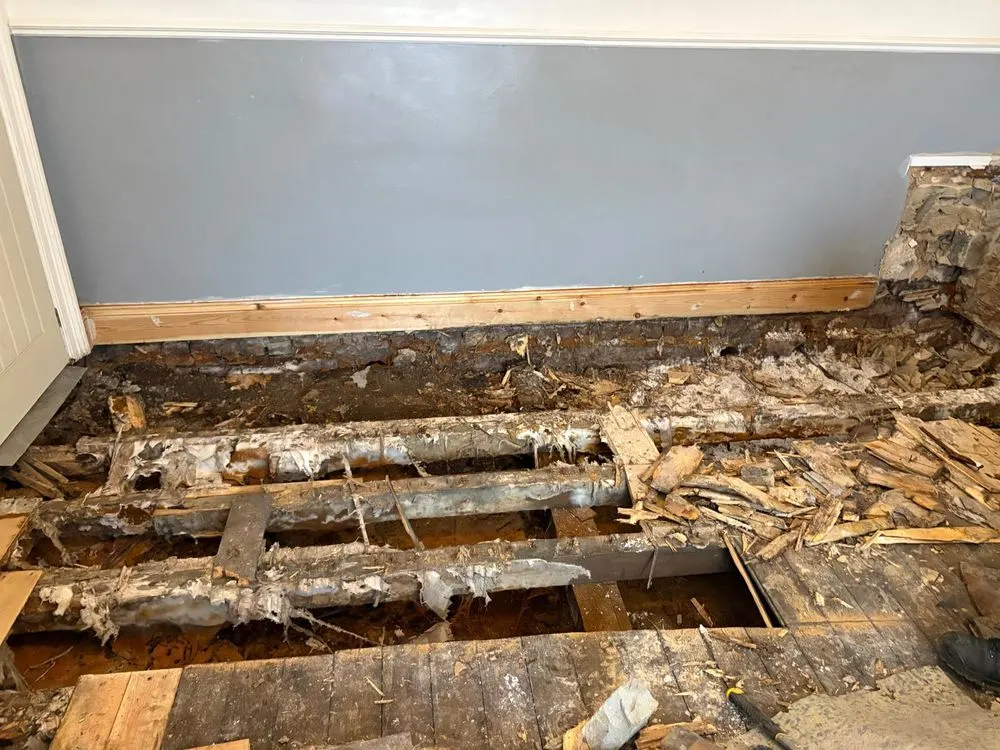
The signs of a rotting floor
Rot under a floor is hidden by carpet and boards, so it usually shows up as a feeling before it shows up as damage. The floor bounces or gives a little when you walk near a wall. Furniture starts to lean. A gap opens between the floor and the bottom of the skirting board, or the skirting itself goes soft.
There is often a musty smell low in the room as well, and the wall beside the soft patch may have its own signs of damp: stained or crumbling plaster, peeling paint or a tide mark.
When the carpet comes up, the boards along the wall are dark, soft or breaking apart, and the joists underneath can be crumbling where they meet the wall.
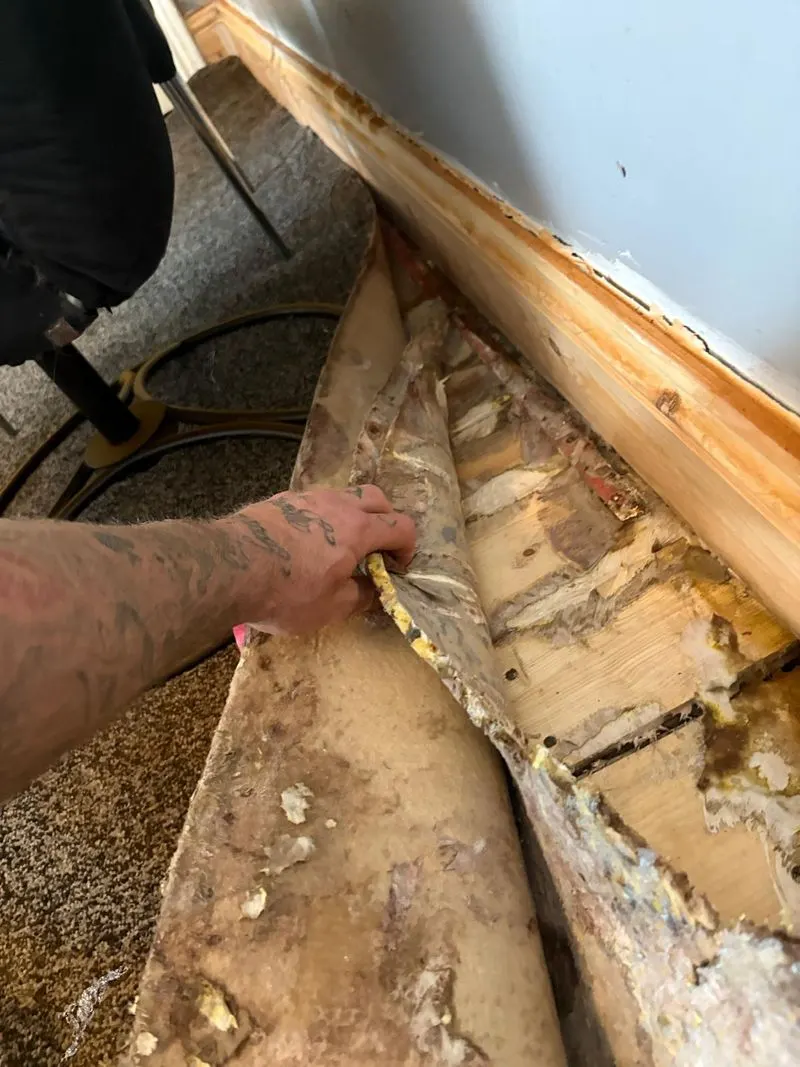
Why damp rots a floor
Timber rots when it stays wet. Under a ground floor there are three usual reasons it does.
A damp wall
Joist ends sit in or against the wall. If the wall has rising or penetrating damp in it, the timber touching it soaks the moisture up.
No air under the floor
The space under a timber floor needs air moving through it. Blocked or buried air bricks leave it damp and still, and the timber stays wet.
A leak
A slow leak from a pipe, a radiator valve or a bath can soak boards and joists for months before anything shows above the floor.
How to tell what is behind it
Where the soft patch is tells you a lot about the cause.
- Soft along an outside wallSuspect damp in the wall. Look for stained or blown plaster and marks low on the wall beside it. See damp walls.
- Soft across a wider areaCheck the air bricks outside. If they are blocked, painted over or below the level of a path, the space under the floor may not be getting any air.
- Soft near a bathroom, kitchen or radiatorCheck for a slow leak before anything else.
- A musty smell but a firm floorThe timber may be damp without having rotted yet. See musty smells.
You cannot see under a floor without lifting it, but a free damp survey with a damp meter shows whether the wall beside it is damp, which is where the answer usually is.
What fixing a rotten floor involves
New timber on its own does not last. If the damp that rotted the old joists is still there, it will start on the new ones. So the job has two halves, and the damp comes first.
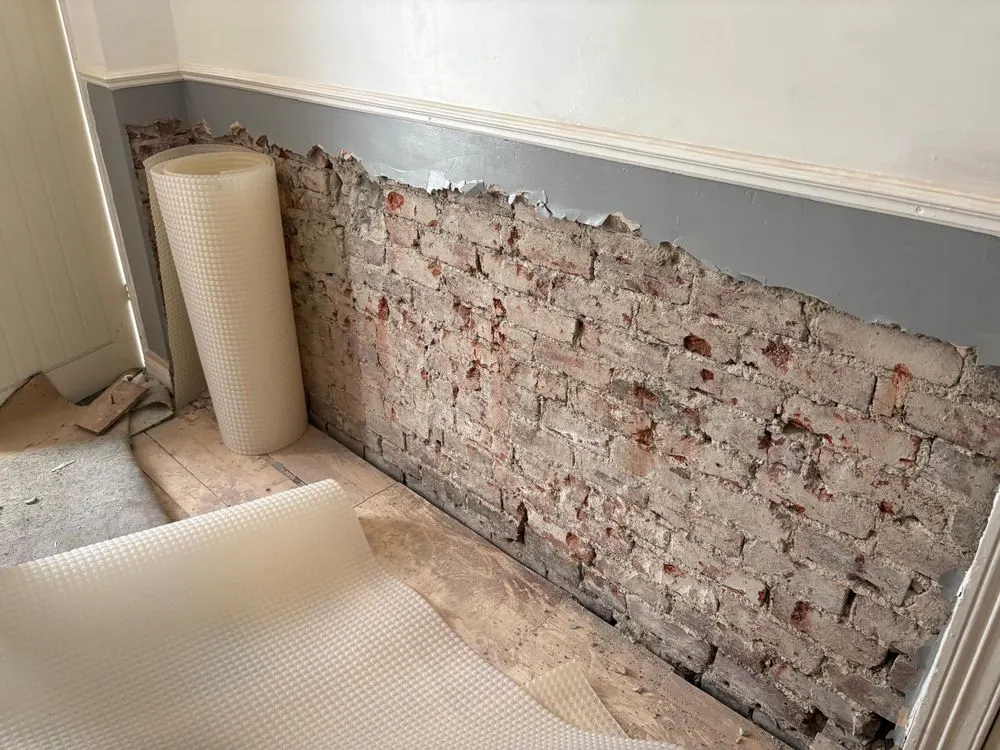
Deal with the damp. Where the wall is the cause, it is stripped back to brick and treated, in the same way as any other rising damp or penetrating damp job.
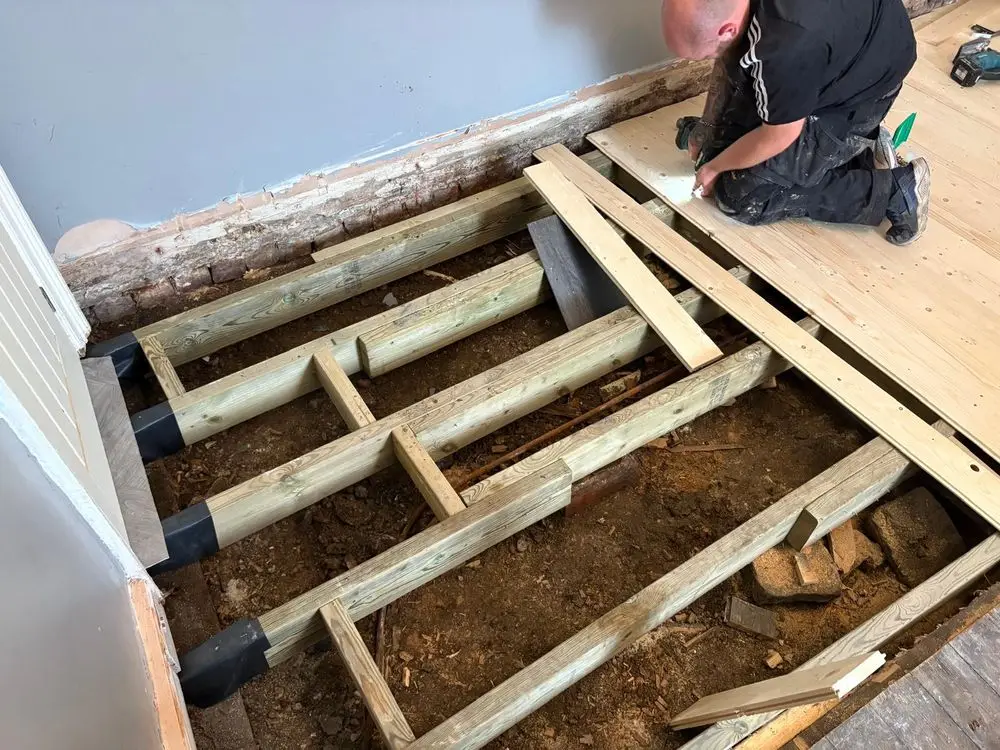
Replace the timber. The floor is lifted, the rotten joists and boards come out, and new joists and boards go in. The ends of the new joists are wrapped where they meet the wall, so the timber is not sitting directly against the brickwork.
Finish the wall. The treated wall is replastered and the room is left ready to decorate.
What affects the cost of fixing a rotten floor
The cost depends on how far the rot has gone and what is causing it. These are the main factors.
- How much timber has goneA few boards and joist ends beside one wall, or most of the floor in a room.
- The cause of the dampA damp wall that needs treating is a bigger job than a leak that needs fixing.
- The wall beside itHow much plaster has to come off and be replaced once the damp is dealt with.
- AccessFitted furniture, kitchen units or flooring that has to come up and go back.
The full picture only shows once the boards are up, so we tell you what we can see at the survey and agree anything further with you before it is done. Book a free damp survey to start.
What happens if you leave a rotting floor
Rot does not stop on its own. While the timber stays damp it keeps breaking down, and it moves along the joist away from the wall. A soft patch by the skirting becomes a floor that dips, and eventually one that will not safely take weight.
The longer it is left, the more timber has to be replaced, and the damp in the wall beside it keeps damaging the plaster in the meantime.
A rotten floor beside a damp wall, put right
On this job, lifting the floor beside a damp wall showed the joists had rotted. We stripped the wall back to brick to deal with the damp, then fitted new joists and boards, with the joist ends wrapped where they meet the wall. The photos are in our projects.
Rotten floor questions
What causes floor joists to rot?
Damp. Timber that stays wet for long enough will rot, and joists are most at risk where their ends sit in or against a damp wall, or where the space under the floor has no air moving through it.
How do I know if my floor joists are rotten?
The usual signs are a floor that feels springy or soft underfoot, boards that dip near a wall, a gap opening under the skirting board and a musty smell low in the room. The only way to be sure is to lift a board and look.
Can you replace joists without taking up the whole floor?
Often, yes. Rot is usually worst beside the damp wall, so the floor is lifted there and the affected joists and boards are replaced. How far it goes depends on what is found once the boards are up.
Will the rot come back after the joists are replaced?
It can if the damp is left in place. That is why we deal with the damp wall as part of the same job, and wrap the ends of the new joists where they meet the wall.
Is it wet rot or dry rot?
Wet rot is the more common of the two and stays where the timber is wet. Dry rot is less common but can spread further, so it is worth having any rot looked at properly before work is planned.
Is a springy floor always rot?
No. A floor can move because of loose boards or undersized joists as well. But a springy floor beside a wall with damp in it is worth checking, because the two often go together.
Floor gone soft beside a wall?
Book a free damp survey and we will check the wall beside it and tell you what we find.