
Basement and cellar tanking — dry, usable space below ground
Waterproofing for damp and wet cellars across Dewsbury, Wakefield and West Yorkshire. Cavity drain membrane systems, with drainage and sump pumps where they are needed, designed around how the water is actually getting in.
Why cellars and basements get damp
A cellar sits below the level of the ground outside, so its walls are holding back soil that is often wet. After heavy rain, or where the water table is high, that moisture presses against the walls and floor and finds its way in through the brickwork, through the floor, and especially through the joint where the two meet.
The result can be anything from damp, flaking walls and a musty smell to standing water on the floor. Other common signs are white, powdery salt deposits on the brickwork, rusting metal fixings, and a damp smell that meets you at the top of the cellar steps. Cellars are also cool, so warm air drifting down from the house can add condensation on top. Left alone, a damp cellar is no good for storage, and it can feed damp and smells into the rooms above.
Basement tanking is the general name for waterproofing a room below ground so that it stays dry and usable. There is more than one way to do it, and the right one depends on how the water is getting in.
Why a cellar needs waterproofing, not a damp proof course
Basements and cellars need a different approach to a damp lounge wall. A damp proof course works above ground: it is a barrier low in the wall that stops ground moisture climbing up into the rooms. Below ground, the whole wall and the floor are in contact with wet soil, so there is nothing for a damp proof course to sit above.
That is why cellar waterproofing is designed as a system for the whole room rather than a treatment for one wall. We look at where the water is coming in, how much of it there is and where it can be taken away to, and design the system around that. Proven below-ground systems, not a one-size-fits-all fix.
How cavity drain membrane systems work
Cavity Drain Membrane Systems
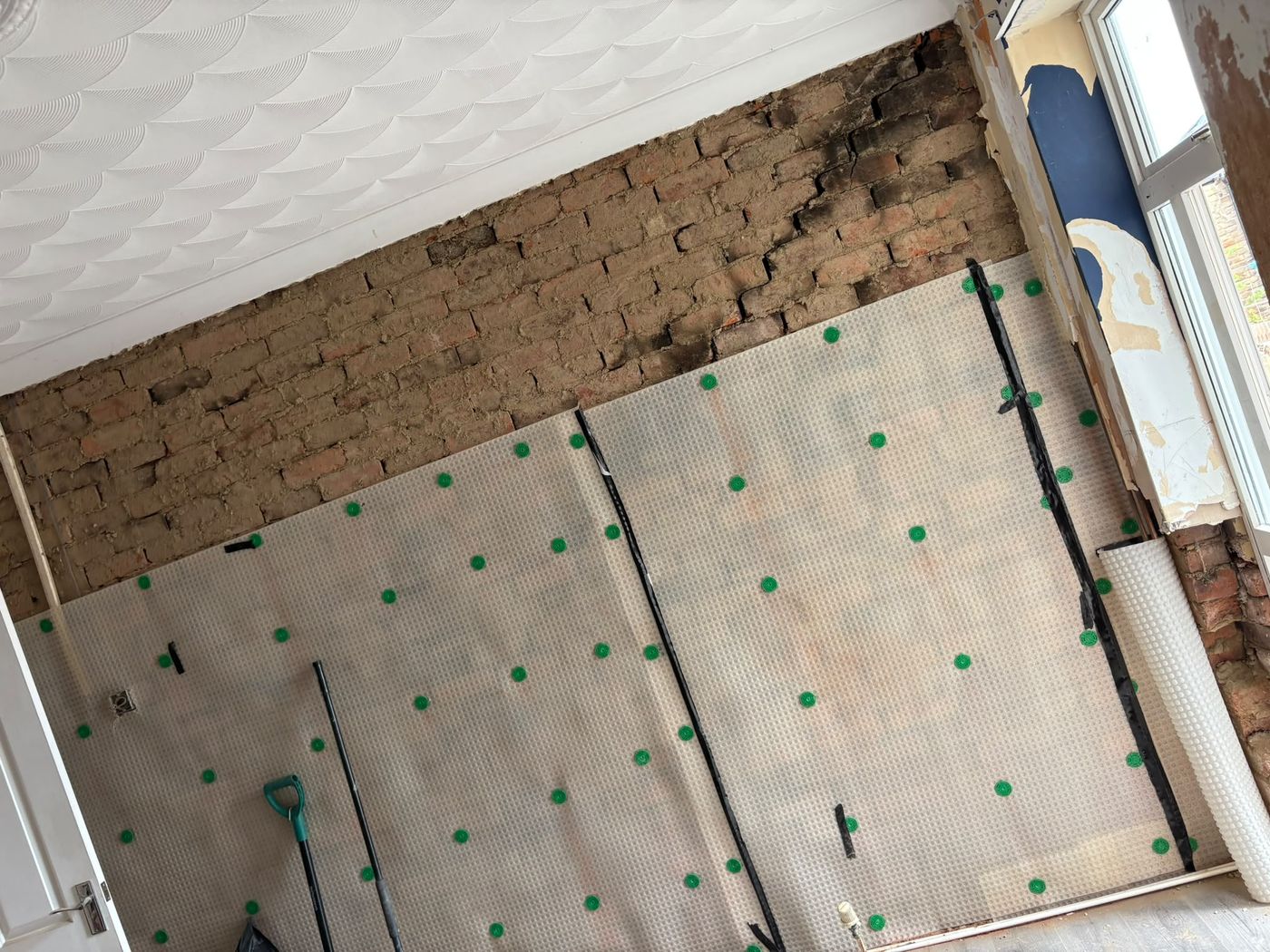
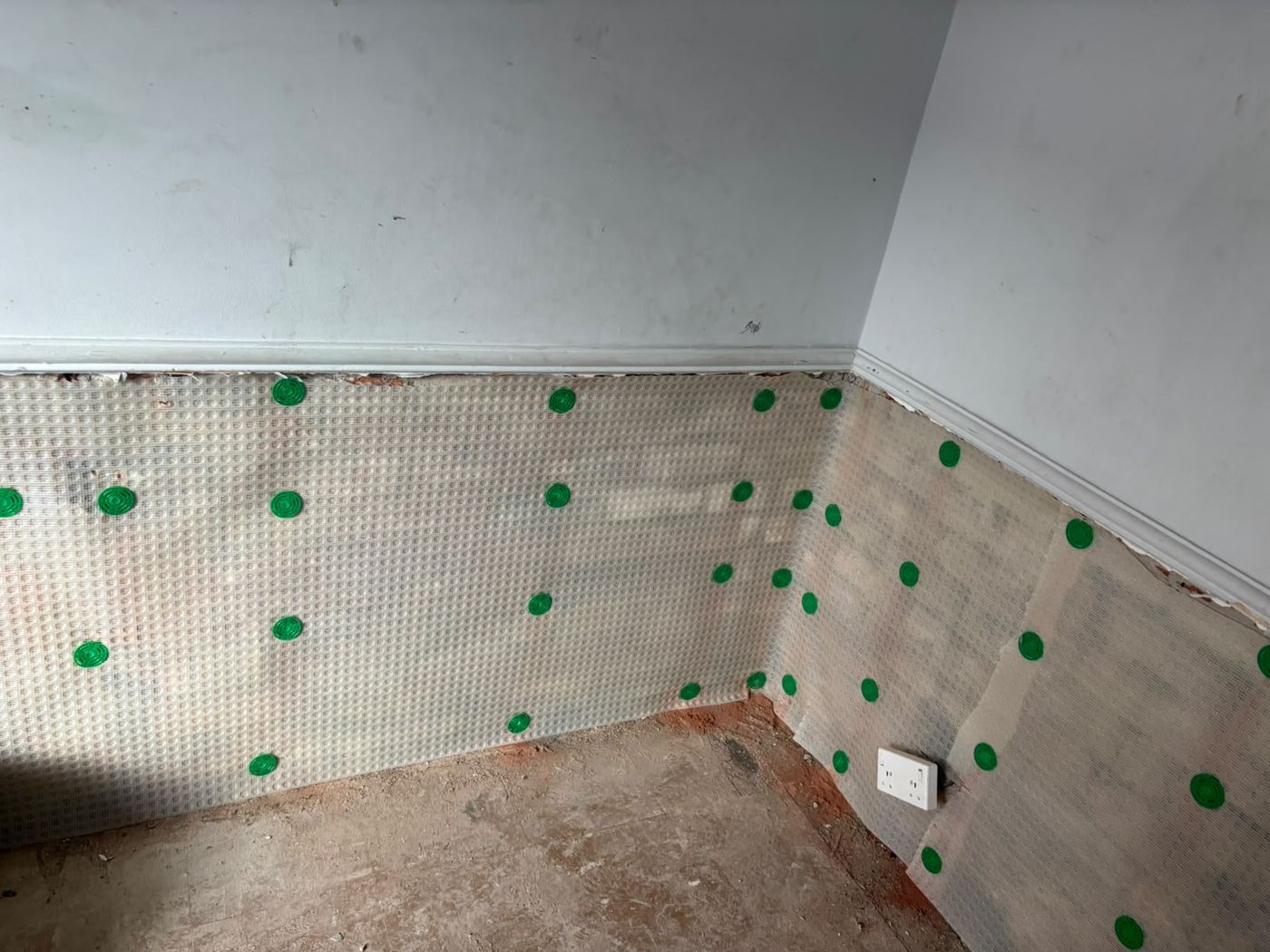
A studded plastic membrane is fixed to the cellar walls and laid over the floor. The studs hold it slightly away from the brickwork, leaving a narrow gap behind it. Any water that comes through the wall runs down inside that gap instead of into the room.
The idea is to manage water rather than fight it. Trying to keep a below-ground wall bone dry against the pressure of wet ground is hard, but giving the water a controlled route away works with it. The membrane can then be finished over so the room is dry and usable.
Drainage and Sump Systems
Where required, a drainage channel runs around the edge of the floor to collect the water from behind the membrane. The channel carries it to a sump, a small chamber set into the floor, where a pump lifts it out and away. Not every cellar needs a pump. It depends on how much water there is and whether it can drain away naturally.
A sump pump is a working part, so like any pump it needs checking from time to time to make sure it is still doing its job.
How we waterproof a cellar
Every cellar is different. The order of work stays the same, but the system that goes in is designed for that space and the water it actually has to deal with.
- 1. Free cellar surveyWe look at the walls and floor, where the water shows, how much of it there is and where it could be drained to.
- 2. A system designed for your cellarWe explain what the cellar needs, whether that is a membrane alone or a membrane with a drainage channel and sump, and give you a fixed price in writing.
- 3. InstallationThe cellar is prepared, the membrane is fixed to the walls and floor, and any drainage and sump are installed so water has a controlled way out.
- 4. Guarantee on completionOnce the work is finished, you get a written 10-year guarantee on the waterproofed areas.
What affects the price of basement tanking
Cellar waterproofing varies a lot from one job to the next, so we never price it without seeing the space. These are the things that drive the cost.
- The size of the cellarThe area of wall and floor that needs covering. A single small cellar room and a full basement are very different jobs.
- How much water is getting inA damp wall and water standing on the floor call for different systems. More water usually means drainage as well as a membrane.
- Whether a sump and pump are neededIf water cannot drain away naturally, a sump chamber and pump have to be installed to take it out.
- AccessNarrow steps, low headroom and restricted access make it harder to get materials in and old material out.
- What has to come out firstOld coatings, failed plaster or anything stored in the cellar all have to be cleared before the system can go in.
- How you want to use the spaceA dry cellar for storage and a basement you want to use as a room need different levels of finish.
The survey is free and there is no obligation. Book a free cellar survey and you'll get a fixed price in writing for the system your cellar actually needs.
Guarantee
A 10-year guarantee on cellar waterproofing
Below-ground and cellar waterproofing carries a written 10-year guarantee on the treated areas, and it passes to the next owner if you sell the house, as long as the system has not been altered, for example by drilling into the waterproofed walls. The full terms come with your quote. It is separate from the 30-year guarantee on treated areas above ground, because a below-ground system is a different kind of work.
Basement tanking questions
What is basement tanking?
Basement tanking is the general name for waterproofing a room below ground, such as a cellar or basement, so that it stays dry. Older methods relied on coatings to hold water out. Our systems use a cavity drain membrane, with drainage and a sump where needed, to control water and carry it away.
Can a damp cellar be made usable?
In most cases, yes. Once water is being managed and carried away, a cellar can be kept dry day to day and used for storage, and with the right finish it can be used as a room. We'll tell you what is realistic for your cellar on the free survey.
What is a cavity drain membrane?
It is a studded plastic sheet fixed to the walls and floor of a below-ground room. The studs leave a small gap between the membrane and the wall, so any water that comes through runs down behind the membrane into drainage, rather than into the room.
Do I need a sump pump?
Not always. A sump and pump are needed where water collected behind the membrane cannot drain away naturally. How much water is getting in, and where it can go, decide whether your cellar needs one.
What guarantee comes with cellar waterproofing, and does it transfer?
Below-ground and cellar waterproofing carries a written 10-year guarantee on the treated areas, and it passes on to the next owner if you sell the house. The condition is that the system has not been altered, such as by drilling into the waterproofed walls. The full terms come with your quote.
Is the cellar survey free?
Yes. Basement and cellar surveys are free, with no obligation. We look at where and how water is getting in, explain what the cellar needs, and give you a fixed price in writing.
Do you waterproof commercial basements?
Yes. We carry out below-ground waterproofing for commercial clients as well as homeowners.
Got a damp or wet cellar?
Book a free cellar survey and we will tell you what it needs, with a fixed price in writing.