
Damp walls — what is causing them, and what fixes them
A damp patch that won’t dry, stained plaster or paint that keeps lifting. Damp walls have a handful of causes, and the fix depends entirely on which one you have. Here is how to tell, from damp specialists working across Dewsbury, Wakefield and West Yorkshire.
What damp walls look like
Damp walls rarely look dramatic at first. It usually starts with a darker patch on the plaster, a stain that comes back through fresh paint, or wallpaper starting to lift at the edges. The wall may feel cold and slightly damp to the touch, and the room can develop a stale, musty smell.
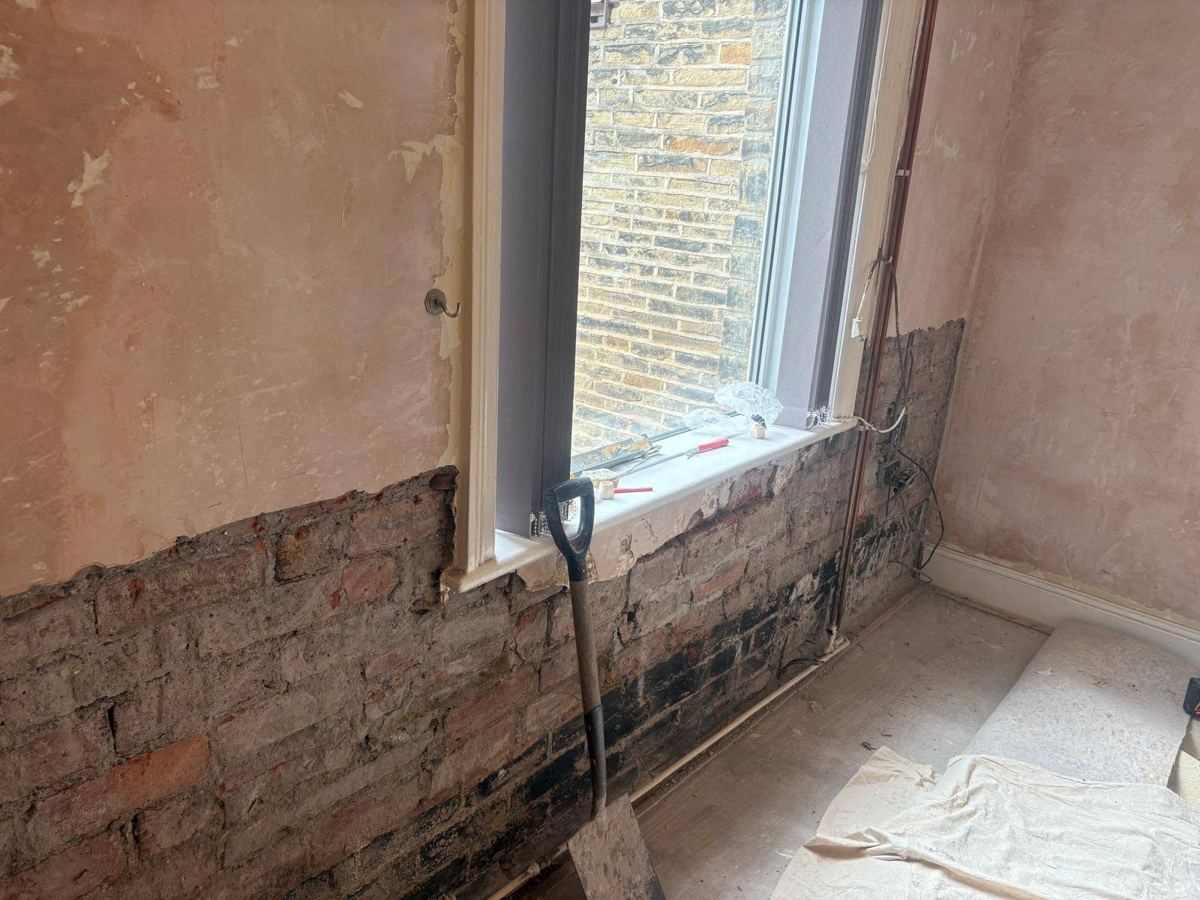
As it goes on, the signs get harder to ignore: brown or yellow tide marks, bubbling paint, white powdery salts on the surface and plaster that sounds hollow when you tap it. Black mould often follows in corners and behind furniture.
Where the damp appears, and when it gets worse, are the best clues to what is causing it.
The three main causes of damp walls
Almost every damp wall we see comes down to one of these, and sometimes more than one at once.
Rising damp
Moisture from the ground climbing up through ground-floor walls because the damp proof course is missing, failed or bridged. It stays low on the wall.
Penetrating damp
Rain getting in from outside through worn pointing, leaking gutters, cracked render or around windows. It can show at any height.
Condensation
Moisture from cooking, washing and breathing settling on cold walls inside the home. It is the most common cause of damp walls in bedrooms and bathrooms.
How to tell which kind of damp you have
Look at where the damp is and how it behaves. These are the patterns that point to each cause.
- Low on a ground-floor wallA tide mark or stained band up to about a metre high, often with salts, points to rising damp.
- Worse after rainA patch that grows or darkens after wet weather, at any height, points to penetrating damp.
- Worse on cold morningsDamp corners, streaming windows and mould that build up in winter point to condensation.
- Around a pipe or under a bathroomA patch near plumbing that stays damp whatever the weather may be a leak, not damp at all.
These patterns overlap, and plenty of homes have two causes at once. A damp meter reading on a free damp survey settles it.
What fixing damp walls involves
The fix always follows the cause, which is why we never quote for damp walls without finding it first.
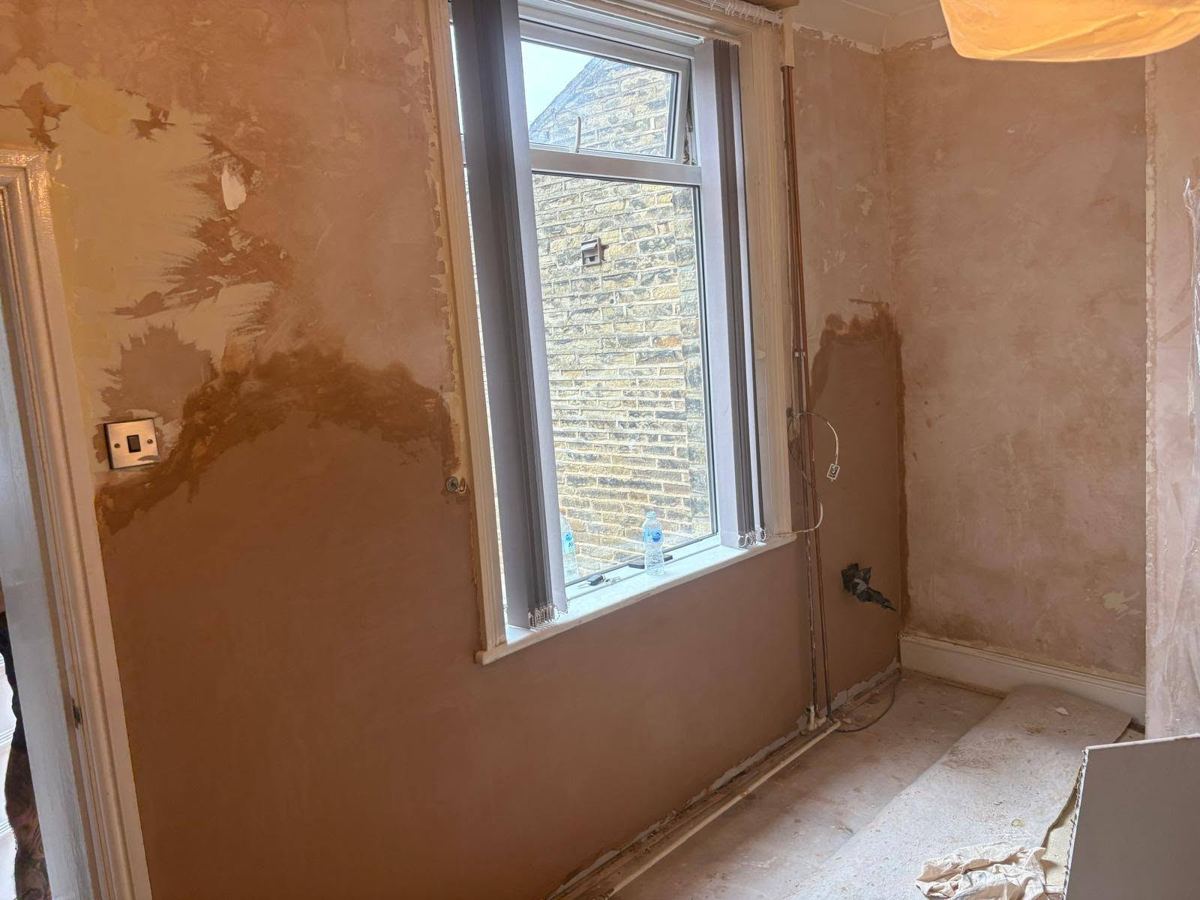
For rising damp, the salt-contaminated plaster is stripped back to brick, a new chemical damp proof course is injected, a meshed membrane is fixed and the wall is replastered. See rising damp treatment.
For penetrating damp, the way in has to be found and stopped first, then the damaged plaster inside is put right. See penetrating damp treatment.
For condensation, the answer is usually better ventilation, such as a PIV unit, rather than work on the wall itself. See condensation control.
Whatever the cause, new plaster is ready to decorate two weeks after it goes on.
What affects the cost of fixing damp walls
There is no single price for damp walls, because the cause decides the job. These are the things that make the difference.
- The causeVentilation for condensation, a new damp proof course for rising damp and repairs outside for penetrating damp are very different jobs.
- How much wall is affectedOne patch, one wall or several rooms. Damp meter readings show exactly where the moisture is.
- The state of the plasterWhether the plaster can stay, or has been damaged enough by damp and salts to be stripped and replaced.
- AccessFurniture, kitchen units and radiators against the damp wall all have to be moved or worked around.
There is no charge to find out. Book a free damp survey and, if work is needed, you'll get a fixed price in writing.
What happens if you leave damp walls
Damp walls do not fix themselves. The longer water sits in a wall, the further it spreads, and the more plaster and decoration has to be replaced when it is finally dealt with. Salts left behind by rising damp keep breaking plaster down, and repeated redecorating only hides the problem for a season.
Damp also brings mould, and living with damp and mould can affect your health, especially for children, older people and anyone with asthma. Left long enough, persistent damp can start to affect timber such as skirting boards and floor joists.
Damp walls, before and after
A window wall on one of our rising damp jobs: stripped back to brick during treatment, then replastered to a smooth finish.
Damp wall questions
Why is there a damp patch on my wall?
A damp patch is moisture getting into the wall from somewhere: up from the ground, in from outside, from condensation inside the room, or from a leak. Where the patch is and whether it changes with the weather are the best clues to which one it is.
Can I just paint over a damp wall?
You can, but it will not last. Paint over a damp wall blisters and peels, stains come back through, and the damp keeps spreading behind it. The cause needs fixing before the wall is redecorated.
Are damp walls a sign of a serious problem?
Not always. Plenty of damp walls are caused by condensation, which is often fixed with better ventilation rather than building work. But damp that is left alone gets worse, so it is worth finding the cause early.
Will a dehumidifier dry out a damp wall?
A dehumidifier helps with condensation by taking moisture out of the air. It will not stop rising damp or water getting in from outside, so if the wall stays damp while the dehumidifier runs, something else is going on.
Why is the damp only on one wall?
Damp on a single wall usually points to something specific to that wall: it may be an outside wall facing the worst of the weather, sit below a leaking gutter or window, or be the coldest wall in the room where condensation collects. Where exactly the damp sits narrows it down.
How much does it cost to fix damp walls?
It depends on the cause and how far the damp has spread, so there is no honest single figure. Our survey is free, and if work is needed you get a fixed price in writing before anything starts.
Damp walls in your home?
Book a free damp survey and we will tell you what is causing it and what will fix it.