
Ceiling repair — from collapsed to ready to decorate
Ceilings that have cracked, sagged, stained or come down altogether, repaired across Dewsbury, Wakefield and West Yorkshire. We board, skim and leave the room clean, and if damp or a leak caused it we deal with that too.
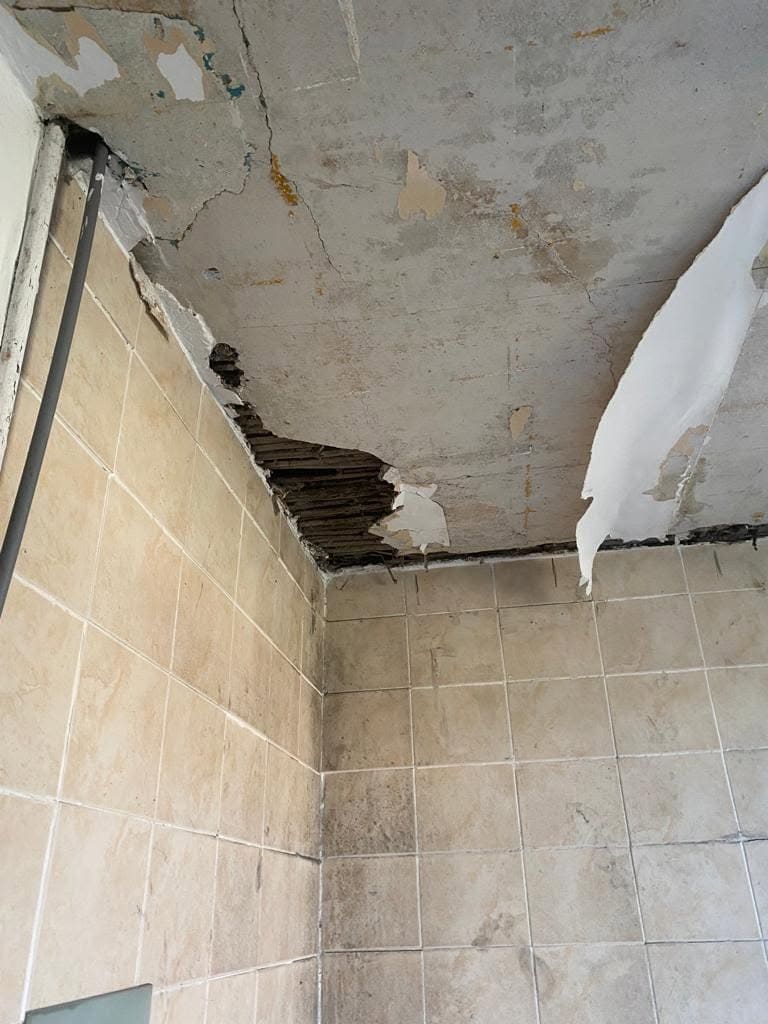
When a ceiling needs repairing
Ceilings fail for a handful of reasons, and most of them get worse quietly until a patch comes down. If yours is sagging, cracked, stained or sounds hollow when you tap it, it is worth looking at before it drops.
- Water damage. A roof leak, an overflowing gutter or a burst pipe soaks the ceiling until the plaster stains, sags and eventually falls.
- Old lath and plaster. In older houses, the plaster is keyed onto timber laths. As that key breaks down with age, whole sections lose their hold.
- Damp and mould. Bathrooms and kitchens with poor ventilation take the worst of it, and a constantly damp ceiling breaks down from the surface in.
- Movement and cracking. Hairline cracks are common, but wide or spreading cracks and bulges mean the ceiling is moving.
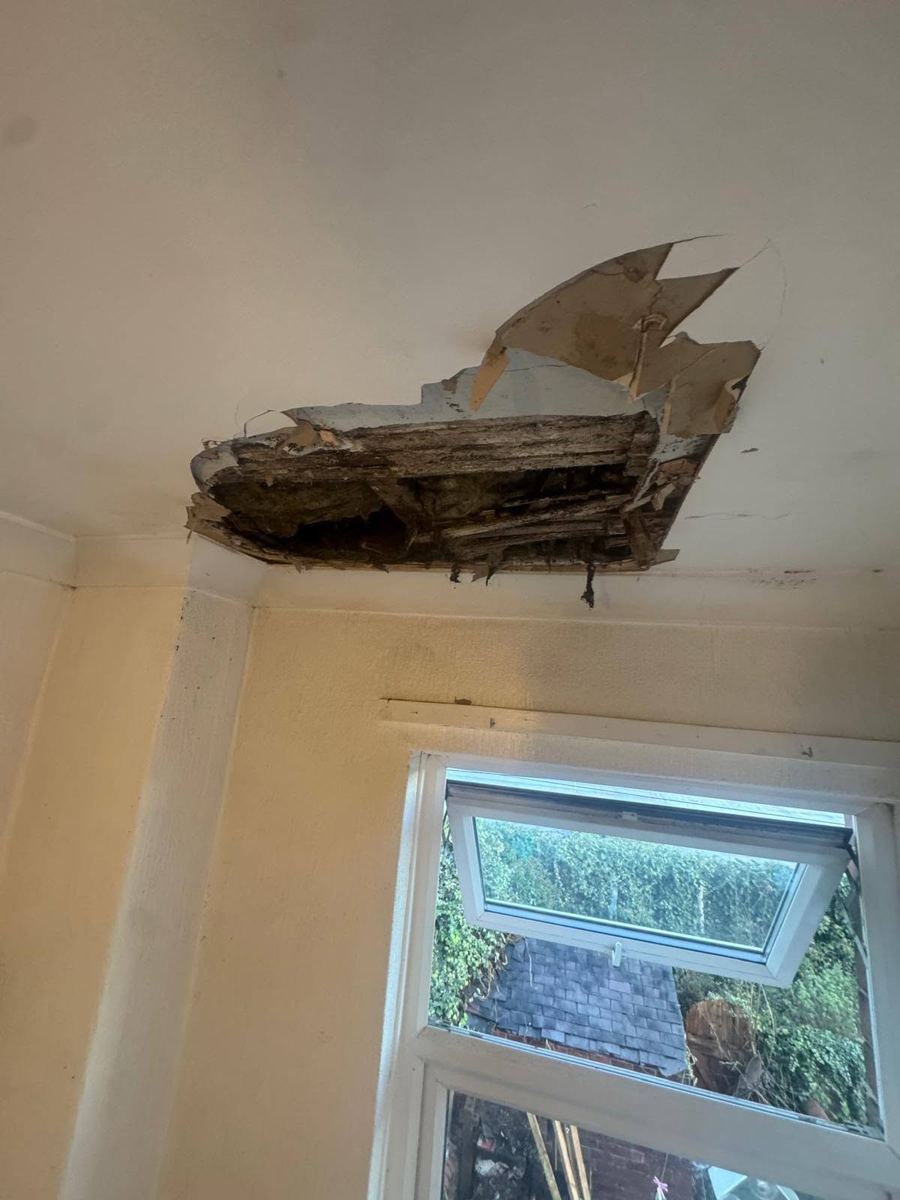
Signs a ceiling is in trouble
Ceilings rarely fail without warning. These are the things worth acting on before a section comes down.
- A bulge or a sagAny dip in a ceiling means it has parted company with what is holding it up, and it will not settle back on its own.
- Brown or yellow stainingA ring-shaped stain is water from above: a leak, an overflow, or a bathroom in the room over it.
- A hollow, drummy soundTap it gently. A sound ceiling is dull and solid. A hollow sound means the plaster has lost its grip on the laths or board behind.
- Cracks that keep coming backHairline cracks are normal in most houses. Cracks that reopen after filling, or that run in a line, usually mean movement.
- Flaking paint and mouldCommon in bathrooms and kitchens, where a poorly ventilated ceiling stays damp and the surface breaks down.
- Bits on the floorGrit or plaster dust appearing underneath is often the last warning before a bigger piece drops.
If a ceiling is sagging or dropping material, keep people out from under it and get in touch. We can usually tell a lot from a photo before we come out.
How we repair a ceiling
What the ceiling needs depends on how much of it has failed, and we will tell you which applies when we see it.
- 1. Deal with the causeIf water is still getting in, that comes first. A leak needs stopping, and a damp or condensation problem needs treating, or the new ceiling goes the same way.
- 2. Take down or overboardLoose and collapsed sections come down. Where the ceiling above is sound but tired, it can often be overboarded instead, which is quicker and far less mess.
- 3. Board and setPlasterboard is fixed and the joints taped, giving a flat, sound base across the whole ceiling rather than a patch that shows.
- 4. Skim and clean upA finishing skim goes over the board and the room is cleaned before we leave. Give it two weeks to dry and it is ready to decorate.
What affects the price of a ceiling repair
Ceilings are priced on what we find, not from a list. These are the things that make the difference.
- How much has failedA single damaged section, one room, or ceilings through the house.
- Taking down or overboardingPulling an old ceiling down is dirtier and slower than overboarding a sound one, and there is more to clear away.
- Whether water or damp caused itThe leak or damp has to be dealt with first, and that is part of the job rather than an afterthought.
- Height and accessTall rooms, stairwell ceilings and rooms full of furniture all take longer to set up and work in.
- Other tradesRoofers, plumbers and electricians can be brought in and quoted as one price, or you can use your own.
Every quote is a fixed price in writing. Ask us to look at your ceiling and we will tell you whether it needs taking down or can be overboarded.
Ceilings, before and after
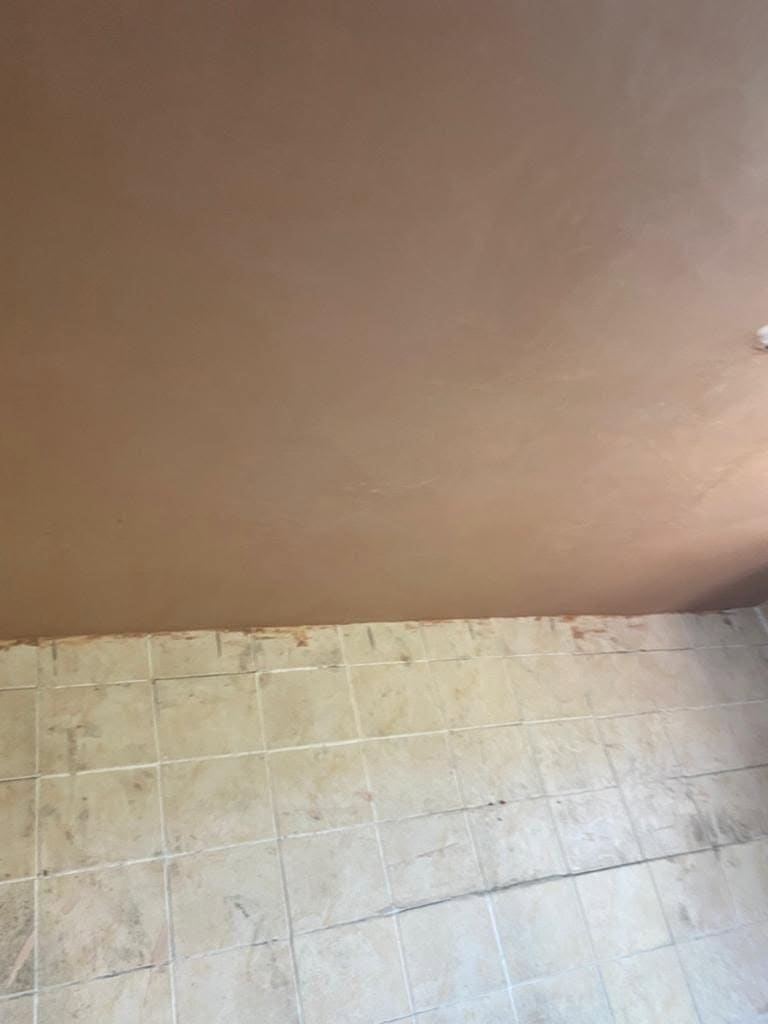
A bathroom ceiling that had come away above the tiling, boarded and skimmed back to a clean, flat finish.
“Lewis turned up on schedule and made an excellent job of replastering the damaged ceiling.”
“We had EH plastering to sort out some damp we found under some wallpaper in a front bedroom caused by a leaking gutter. Extremely professional, reliable and helpful when we were unsure as to what we were dealing with. Brilliant job, would highly recommend.”
Ceiling repair questions
My ceiling is sagging. Is it going to fall?
It might. A sagging or bulging ceiling has lost its hold, and sections can come down without much warning, especially if it has been soaked by a leak. Keep people out from underneath it and get it looked at quickly.
Can you repair just part of a ceiling?
Sometimes, but patches often show through the paint because the new and old surfaces sit slightly differently. Boarding and skimming the whole ceiling gives a flat, even finish that decorates properly.
What is overboarding?
Fixing new plasterboard over the existing ceiling rather than pulling it down. Where the old ceiling is still sound, it is quicker, much less mess, and gives a flat surface to skim.
Do I need the leak fixed first?
Yes. Repairing a ceiling while water is still getting in means doing it twice. If the leak is a roofing or plumbing job, we can bring in the right trade, or you can use your own.
How long does a ceiling repair take?
Most single ceilings are a short job, and we give you a timescale with the quote. The bigger factor is drying time afterwards: leave the new plaster two weeks before decorating.
Will it be messy?
Taking an old ceiling down is dusty work, so floors and furniture are covered before we start and the room is cleaned before we leave.
Ceiling cracked, stained or come down?
Send us a photo or book a free visit, and we will tell you what it needs with a fixed price in writing.