
Wet and dry rot treatment in Dewsbury & Wakefield: the damp stopped, the timber replaced
Rot only starts in timber that stays wet. So when a floor goes soft by the wall or a skirting crumbles, we find out where the water is coming from as well as how far the rot has gone. Then we fix both. We cover Dewsbury, Wakefield and the rest of West Yorkshire.
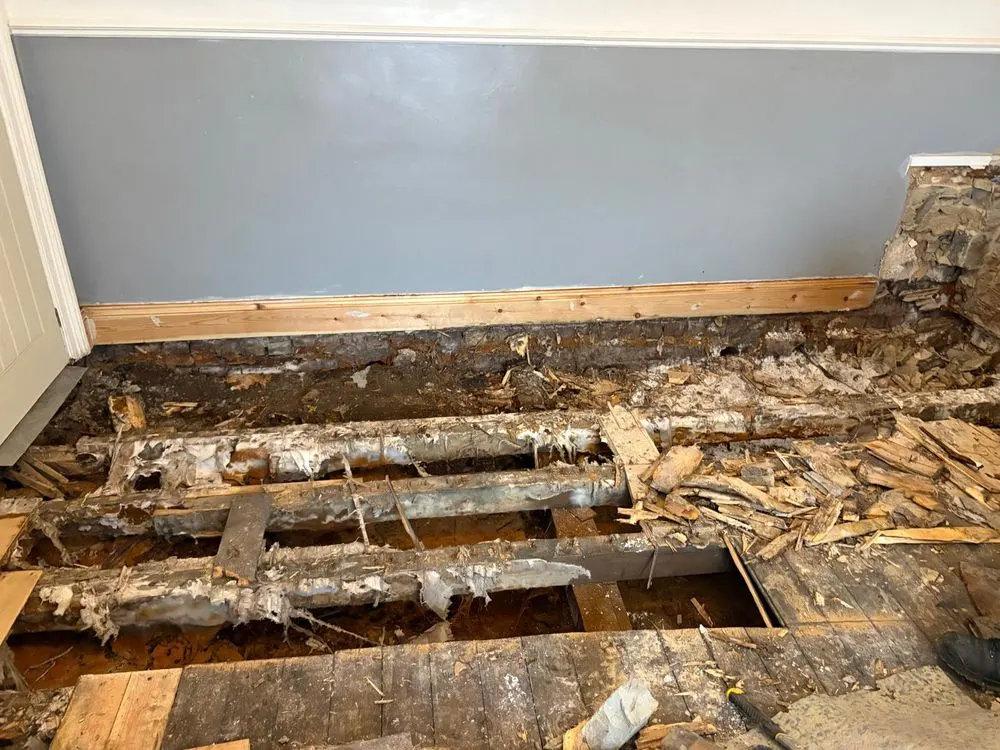
Wet rot and dry rot: the difference
Both are fungi that feed on wood, and both need damp timber to get going. They behave differently after that, and the repair is different too.
Wet rot is far more common. It needs the timber to stay properly wet, so it stays where the water is: joist ends sitting in a damp wall, boards under a leaking radiator valve, the bottom of a door frame. The wood goes dark, soft and spongy, and it cracks along the grain as it dries out. Once the wood dries, it stops.
Dry rot is less common and more serious. It can start in timber that is only a little damp, and then it sends grey strands across brickwork and behind plaster to reach dry timber further away. You might see white growth like cotton wool, a flat orange-brown growth like a pancake, or fine rusty red dust on the floor. The wood goes light and crumbly and breaks up into small brown cubes. It often smells strongly of mushrooms.
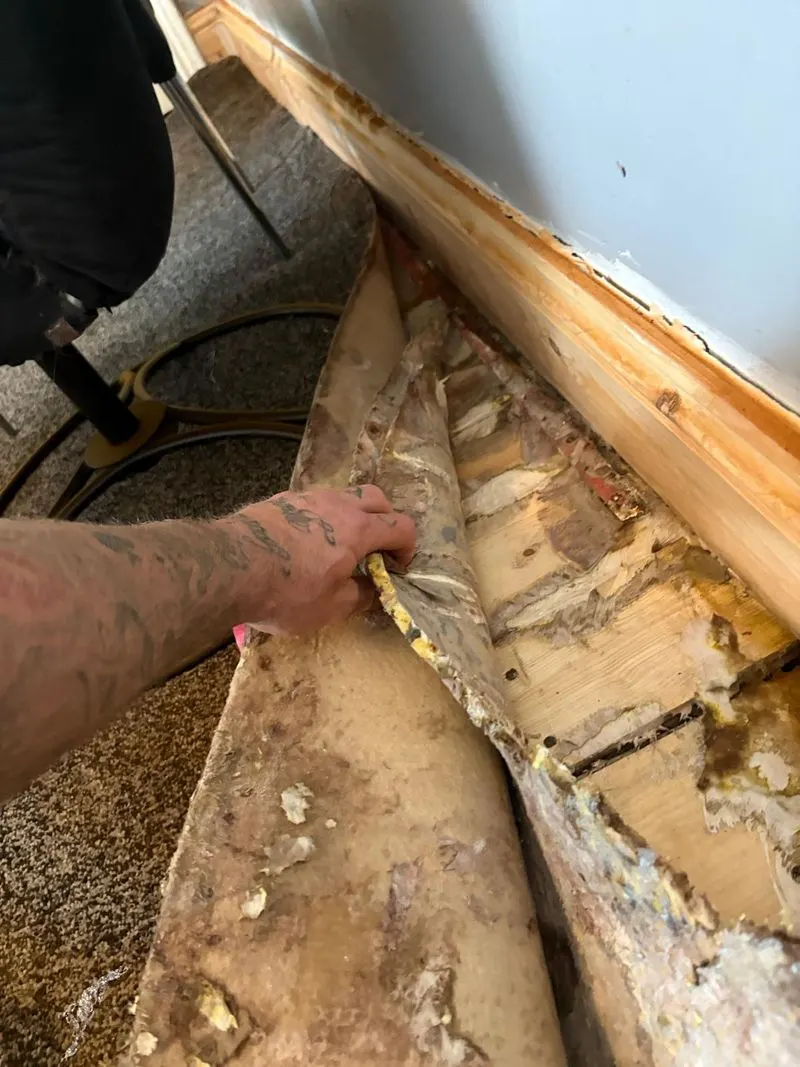
Signs of rot in a house
Rot usually starts out of sight, under a floor or behind a skirting, so the first sign is often something you feel rather than see.
- A floor that dips or bounces Usually along an outside wall, where the joist ends sit in the brickwork.
- Soft or crumbling skirting Press it with a thumb or a screwdriver. Sound timber is hard. Rotten timber gives.
- Dark, cracked or flaky wood Along the grain for wet rot, in small cubes for dry rot.
- A strong musty or mushroom smell Worse in a closed room or when the floor is lifted.
- White growth or red dust Cotton-wool growth, grey strands or rusty red dust point to dry rot. Don't brush it about. Leave it for us to see.
- Damp on the wall above Tide marks, blown plaster or peeling paint just above a soft floor usually mean the same damp is reaching the timber.
Not sure what you're looking at? Send a photo on WhatsApp and we'll tell you what we think.
How we treat wet and dry rot
The order matters. New timber put into a damp spot rots like the old timber did, so the damp gets sorted first.
- Find the water. We take damp meter readings in the walls and timber and look for where the water is getting in. That might be rising damp, rain getting through the wall, a leak, or blocked air bricks under a floor.
- Work out how far the rot goes. For wet rot that is usually the wet area. For dry rot we open up floors and plaster and follow the strands until they stop, because the damage you can see is often only part of it.
- Stop the damp. The wall is treated in the same way as any other rising damp or penetrating damp job. If the cause is a leak or a roof, we bring in the right trade or you can use your own.
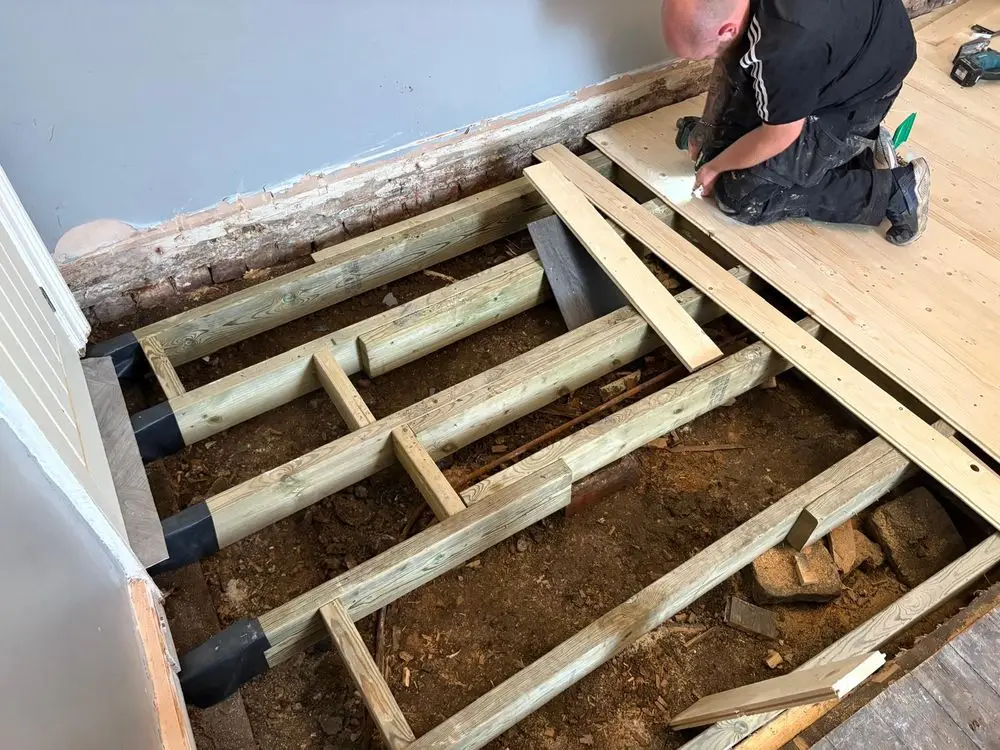
- Cut out and replace the timber. Rotten joists, boards and skirtings come out and new ones go in. Where new joists go back into a wall, the ends are wrapped so they don't sit straight against the brick. With dry rot we cut back past the last sign of it, not just the part that has gone soft.
- Make good. The wall is replastered, the floor goes back down and the room is left ready to decorate.
What affects the price of rot treatment
We can't price rot from a photo, because the size of the job depends on what's under the floor. We look first, tell you what we can see, and agree anything extra with you before it's done.
- Wet rot or dry rot Dry rot means opening up more of the house to find where it stops, so it is the bigger job.
- How much timber has gone A few boards and a skirting is a small job. A run of joists across a room is a much bigger one.
- What's causing the damp Treating a damp wall, fixing a leak and clearing air bricks are very different jobs.
- Getting to it Fitted kitchens, bathrooms and laid flooring may have to come up and go back.
- Plastering afterwards How much wall needs stripping and replastering once the damp is dealt with.
Every quote is a fixed price in writing. Where damp treatment is part of the job, the treated wall has our 30-year guarantee. Book a free survey to get started.
Rot questions
How can I tell if it's wet rot or dry rot?
Wet rot stays where the timber is wet, and the wood goes dark and soft. Dry rot leaves white, cotton-wool growth and grey strands, sometimes with rusty red dust, and the wood breaks into brown cubes. It can also spread behind plaster and through brickwork. If you are not sure, send us a photo on WhatsApp or book a survey.
Is dry rot worse than wet rot?
Usually, yes. Wet rot stays in the wet timber. Dry rot can travel across and through masonry to reach timber further away, so more of the house has to be opened up to find where it ends, and the job is bigger.
Will the rot come back after it's been treated?
Not if the damp is gone. Rot needs wet timber to grow. That is why we find and stop the source of the water before any new timber goes in. Replacing timber and leaving the damp is how rot comes back.
Can I just replace the rotten boards myself?
You can, but check why they rotted first. If the wall beside them is damp or a pipe is leaking, new boards will rot the same way. With dry rot, the visible damage is often only part of it.
Do I need to move out while rot is treated?
It depends on where the rot is and how much floor has to come up. We tell you what to expect when we quote.
Soft floor, crumbling skirting or a smell of mushrooms?
Book a free survey and we'll find out whether it's wet rot or dry rot, what's feeding it, and give you a fixed price in writing. Use the form, or call or WhatsApp if that's easier.
- We get back to you Within one working day.
- We survey, free Damp meter readings in the walls and timber.
- You get a fixed price In writing, with no obligation.