
Blown or crumbling plaster — why it fails and how it is repaired
Plaster that sounds hollow when you tap it, bulges out from the wall or crumbles into powder has lost its hold. Here is what usually causes it, how to tell whether damp is involved, and how we put it right across Dewsbury, Wakefield and West Yorkshire.
What blown and crumbling plaster looks like
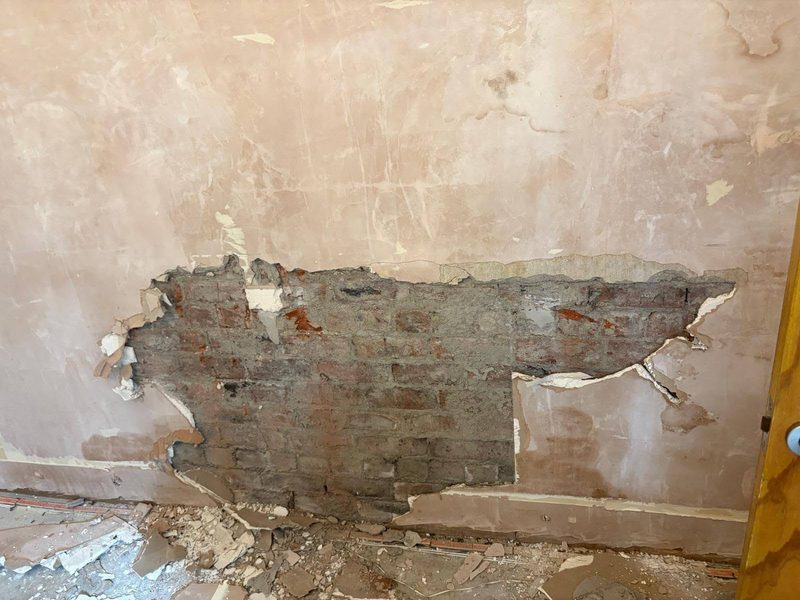
Blown plaster has come away from the brick or block behind it. Tap the wall and it sounds hollow or drummy instead of solid. You may see a bulge, a network of cracks, or a section that moves slightly when you press it.
Crumbling plaster is breaking down in the surface itself. It turns soft, sandy or powdery, often with paint flaking off it, and can be scraped away with a fingernail. The two often turn up together, especially low on ground-floor walls and below windows. Ceilings can blow too, showing as sagging or cracked patches, often below a bathroom or where there has been a leak.
The three main causes of blown plaster
Plaster fails when something breaks the bond with the wall or breaks down the plaster itself.
Damp and salts
The most common cause. Rising damp carries salts into plaster, and as they dry and crystallise they break it down from the inside.
Water from leaks or rain
A leak, or rain getting in from outside, soaks plaster until it softens and loses its grip on the wall.
Age and movement
Very old plaster can simply lose its bond over time, and vibration or small movements in the building can crack it and loosen it.
How to tell whether damp is behind it
Before replacing plaster, it is worth knowing whether it failed because of damp, or it will fail again.
- Low on a ground-floor wallBlown and crumbling plaster in a band near the floor, with tide marks or salts, points to rising damp.
- Below a window or in one patchFailing plaster in one area that stays damp after rain points to penetrating damp or a leak.
- Powdery with white depositsSoft, sandy plaster with salts on the surface has been damaged by moisture and salts.
- Dry, hard and just hollowPlaster that is hollow but dry and hard may simply have lost its bond through age.
A damp meter reading shows whether the wall is still damp before any plastering is done. A free damp survey will check.
What repairing blown plaster involves
Patching blown plaster rarely lasts. The loose area has to come off, back to a sound background, so the new plaster has something firm to hold on to.
If damp caused it, the damp is treated first. For rising damp that means a new damp proof course and a meshed membrane before the wall is replastered. See rising damp treatment.
If the wall is dry, the failed plaster is stripped and the wall built back up, with a backing coat on bare brick or board where it suits, then finished smooth. See re-plastering.
Either way, the new plaster is ready to decorate two weeks after it goes on.
What affects the cost of repairing blown plaster
These are the things that make the biggest difference.
- Whether damp is involvedDamp has to be treated before plastering, which adds to the job.
- How much plaster has failedA small patch below a window, a whole wall, or several rooms.
- What is underneathWhether the wall behind needs a backing coat, boarding or just a finishing coat.
- Walls or ceilingsCeilings are slower to replaster than walls.
There is no charge to find out. Book a free damp survey and, if work is needed, you'll get a fixed price in writing.
What happens if you leave blown plaster
Blown plaster keeps spreading. Every time the wall is knocked, patched or repainted, more of the surrounding plaster loosens, and the eventual repair gets bigger. Filling over it only gives the loose plaster more weight to pull away with. Sections can fall away altogether, especially from ceilings.
If damp caused it, leaving it also leaves the damp to keep working: more plaster breaks down, mould can take hold, and decoration keeps failing.
Blown plaster, from damage to finish
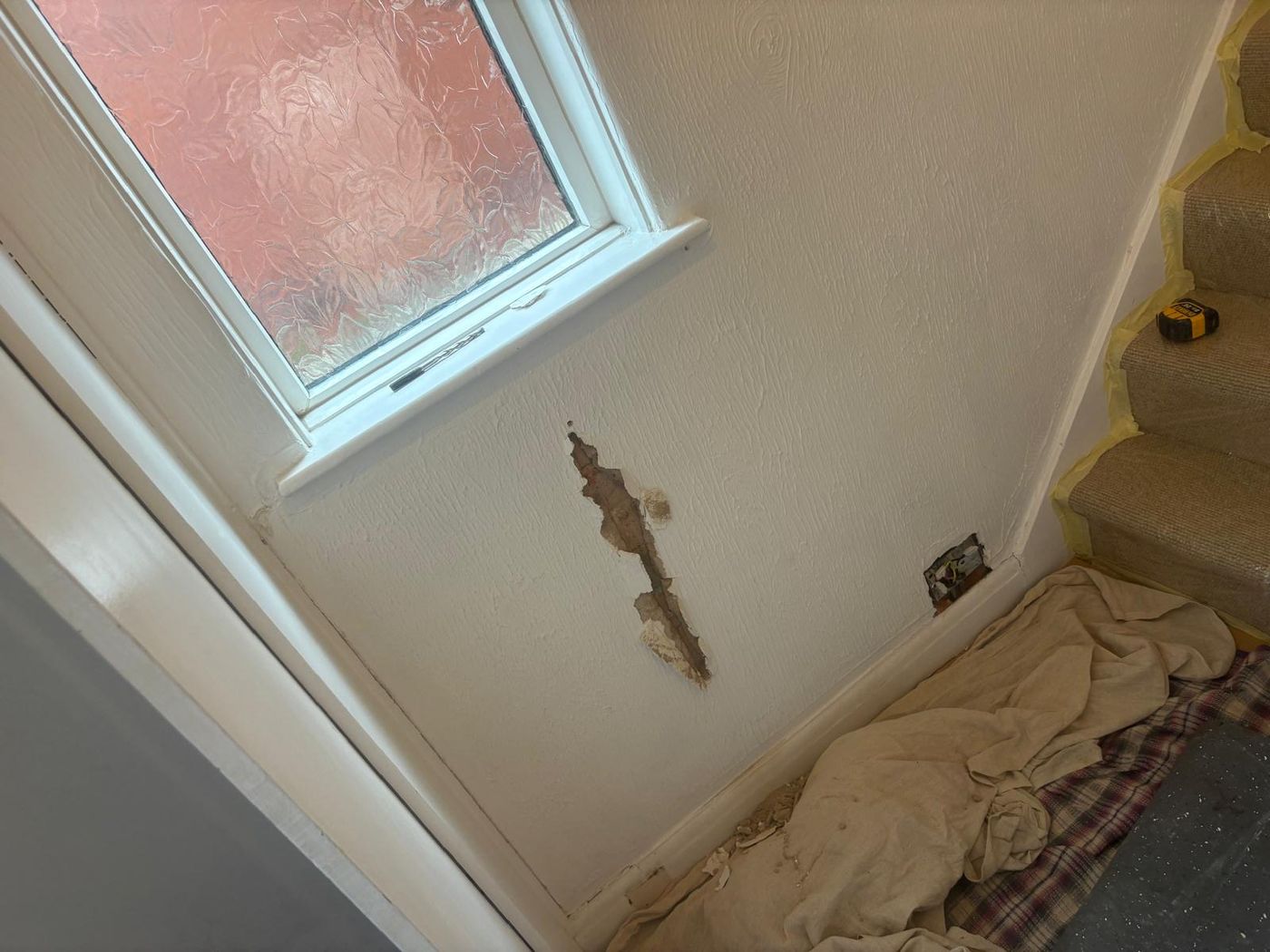
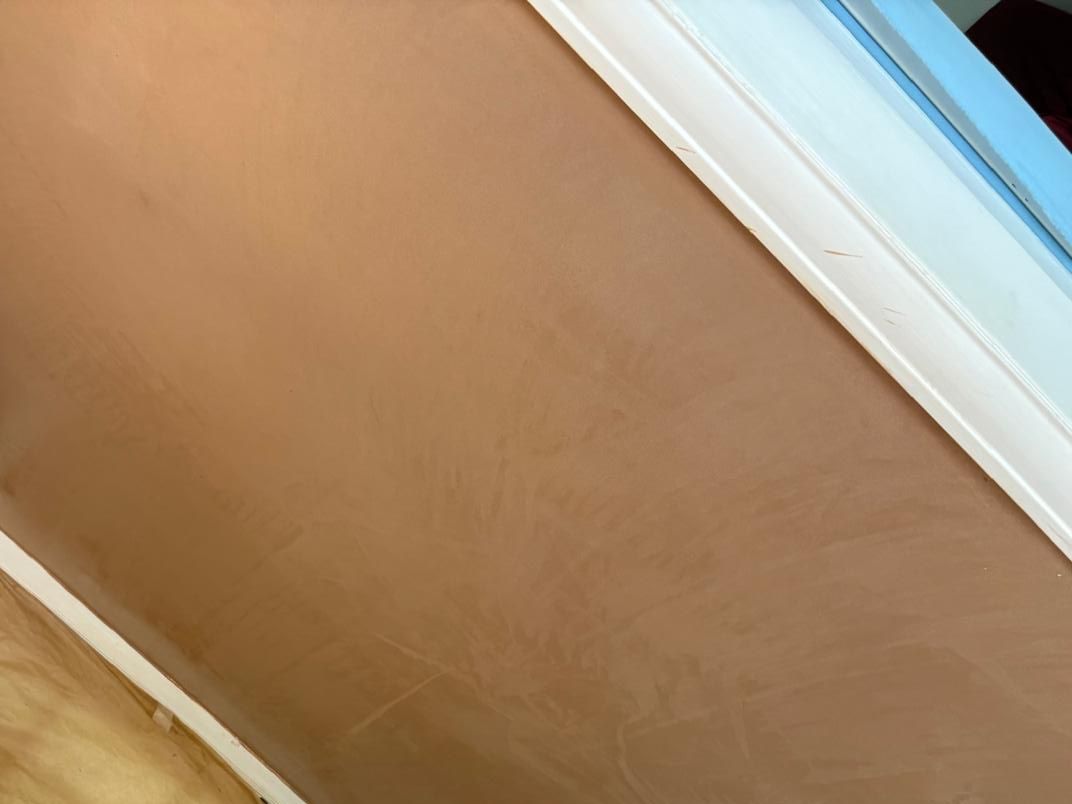
Two photos from the same job: the blown plaster below a window that brought us in, and a stairwell on that job skimmed to a smooth finish once the damp had been treated.
Blown plaster questions
How do I know if my plaster is blown?
Tap the wall gently with your knuckles along the affected area. Sound plaster gives a solid, dull sound. Blown plaster sounds hollow or drummy, and may bulge, crack or move slightly when pressed.
Can blown plaster be patched?
Small areas can be patched, but patches often fail because the plaster around them is loose too. It lasts much longer to take the loose plaster back to a sound edge and replaster properly.
Is blown plaster always caused by damp?
No, but damp is the most common cause, especially low on ground-floor walls. Very old plaster can also lose its bond with age. Checking the wall with a damp meter tells you which.
Why is my plaster crumbling to powder?
Crumbling, sandy plaster has usually been damaged by moisture and salts. As salts dry out and crystallise inside the plaster, they break it apart from the inside. That usually means damp, which needs treating before replastering.
Can I skim over blown plaster?
No. A skim is only as strong as the surface under it, and it will crack and come away along with the loose plaster. Blown plaster has to come off first.
Could blown plaster on a ceiling fall down?
It can. A ceiling that sags, bulges or sounds hollow has lost its hold and may drop in sections, particularly if it has been soaked by a leak. Keep people out from underneath it and get it looked at promptly.
Hollow or crumbling plaster?
Book a free damp survey and we will check whether damp is behind it, with a fixed price in writing to put it right.