
A musty smell in the house — and no damp you can see
A stale, earthy smell that hangs around even after you open the windows usually means damp or mould somewhere, often out of sight. Here is where it tends to hide and how to track it down, from damp specialists covering Dewsbury, Wakefield and West Yorkshire.
What a musty smell usually means
A musty smell is often the first sign of damp, before any stains or mould are visible. People describe it as stale, earthy or like an old cellar. It is usually strongest when you first walk into a room or open a cupboard, and it comes back soon after airing. It is often worst in winter, when homes are closed up, and after a spell of wet weather.
The smell comes from mould and mildew growing where moisture has built up. If you can smell it but cannot see it, the damp is usually somewhere hidden: behind furniture, inside cupboards and wardrobes, under the floor, or below ground in a cellar.
The three usual causes of a musty smell
These are the places the damp behind a musty smell is most often found.
Hidden condensation and mould
Mould growing behind wardrobes, inside cupboards on outside walls, or behind a bed pushed against a cold wall, where nobody looks.
A damp cellar or under-floor space
Cellars and the voids under suspended floors can be damp or wet, and the smell rises into the rooms above.
Damp in the walls
Rising damp, penetrating damp or a slow leak soaking into walls or under floors before it shows on the surface.
How to track down the source
Follow your nose, then look in the places damp hides.
- Strongest in one roomCheck behind and inside furniture on outside walls, and the corners of ceilings and floors.
- Strongest in cupboardsLook at the back walls of wardrobes and under-stairs cupboards, and at clothes or shoes stored against them.
- Strongest near the floor or cellar doorSuspect a damp cellar or moisture under the floorboards.
- Near a bathroom or kitchenCheck for a slow leak under a bath, sink or behind units, as well as condensation.
Some damp is hidden inside walls or under floors. A free damp survey with a damp meter can find moisture you cannot see.
What getting rid of a musty smell involves
Air fresheners and dehumidifiers mask a musty smell or slow it down, but it will keep coming back while the damp behind it is still there. The lasting fix is to find the moisture and deal with it.
If it is condensation and mould, the mould is treated and ventilation is improved, often with a PIV unit, so moisture stops building up in closed-in spaces. See condensation control and black mould removal.
If it is coming from a damp cellar, the cellar needs waterproofing so it stops taking on water. See basement tanking.
If damp in the walls is behind it, the right treatment depends on whether it is rising or penetrating damp, followed by replacing any damaged plaster. Once the source is dealt with and the area dries out, the smell fades with it.
What affects the cost of fixing a musty smell
Because the cause can be anywhere, the cost varies widely. These are the main factors.
- Where the damp isMould behind furniture, a damp cellar and damp inside walls are very different jobs.
- How far it has spreadOne cupboard, one room, or several rooms and a cellar.
- Damage already doneWhether plaster, boards or other surfaces need replacing as well as the cause being fixed.
- VentilationWhether the home needs a ventilation improvement to stop moisture building up again.
There is no charge to find out. Book a free damp survey and, if work is needed, you'll get a fixed price in writing.
What happens if you ignore a musty smell
A musty smell means damp is already doing damage somewhere. Left alone, hidden mould spreads onto walls, furniture, clothes and bedding, and damp that is soaking into walls or floors keeps breaking down plaster and can affect timber.
By the time the damage becomes visible, the repair is usually bigger than it needed to be. Living with damp and mould can also affect health, especially for children, older people and anyone with asthma.
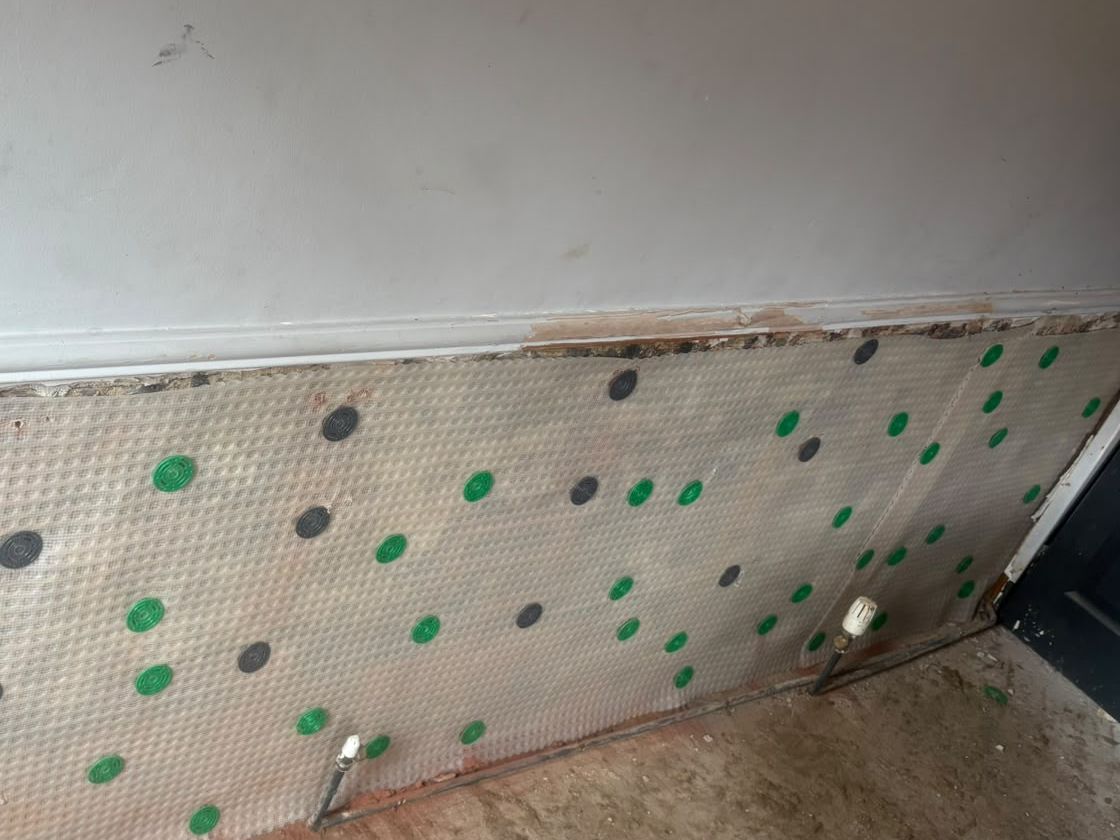
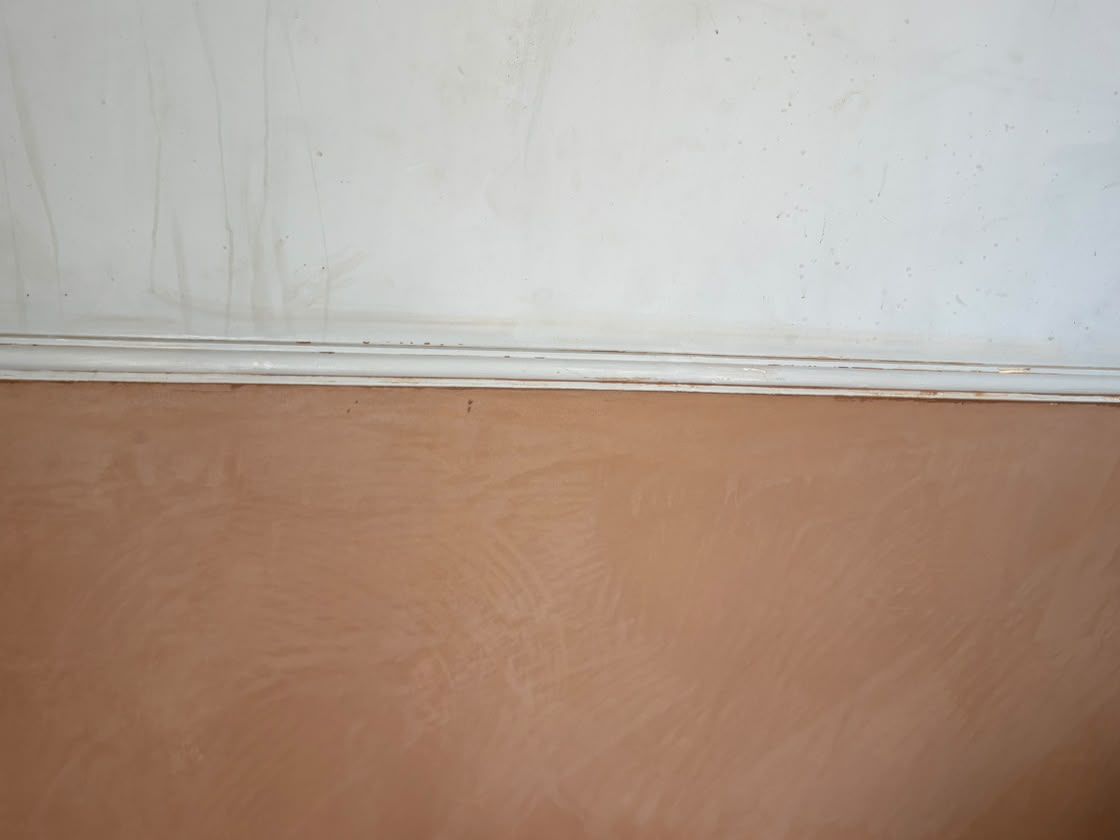
Damp treated, before and after
Once the source of the damp is found and treated, the damage it has done can be put right. This wall in a housing provider’s property had a meshed membrane fixed over the treated brickwork, then was replastered to a smooth finish.
Musty smell questions
Why does my house smell musty but I can’t see any damp?
The damp is probably hidden. The most common places are behind furniture and inside cupboards on outside walls, under floorboards, and in a cellar. Mould growing out of sight gives off the smell long before damage shows.
Why does my wardrobe smell musty?
Wardrobes on outside walls stop warm air reaching the wall behind them, so condensation collects there and mould grows on the back of the wardrobe or the wall. Leaving a gap behind it and improving ventilation helps.
Can a damp cellar make the whole house smell?
Yes. Damp air and the smell of mould from a cellar rise into the rooms above, especially near the cellar door and on the ground floor. Waterproofing the cellar deals with the source.
Why does the smell come back after I air the room?
Airing clears the smell from the air, but not the damp or mould producing it. Once the window is shut, the source keeps releasing it and the smell builds up again. That is a strong sign there is damp or mould somewhere you have not found yet.
Is a musty smell harmful?
The smell itself is a sign of mould and damp, and living with damp and mould can affect health, particularly for children, older people and people with asthma or allergies. It is worth finding the source promptly.
How do you find hidden damp?
We take damp meter readings on walls and in the areas where the smell is strongest, and look in the places damp typically hides. That shows where moisture is, even when nothing is visible on the surface.
Can you smell damp but not see it?
Book a free damp survey and we will track down where it is coming from.