
Penetrating damp — found at the source and stopped
Wet walls, damp patches that grow after rain, or damp upstairs and around windows usually mean water is getting in from outside. We treat penetrating damp across Dewsbury, Wakefield and West Yorkshire by finding the way in, fixing it, and putting the inside right.
What penetrating damp is
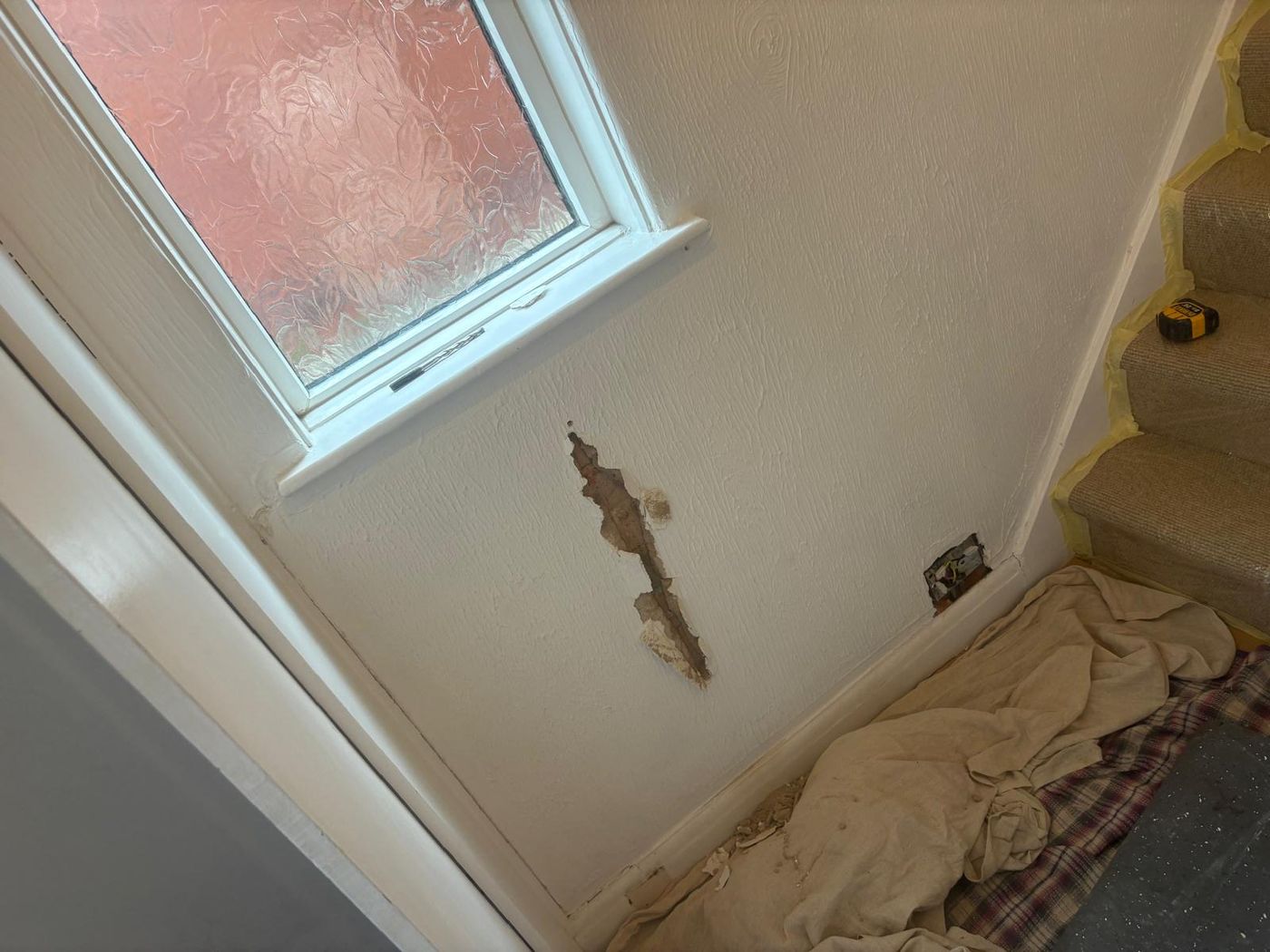
Penetrating damp is water getting into a building from the outside. Rain soaks through a wall, runs in around a window frame, or comes through from a leaking gutter, roof or pipe, and turns up inside as a damp patch or wet wall.
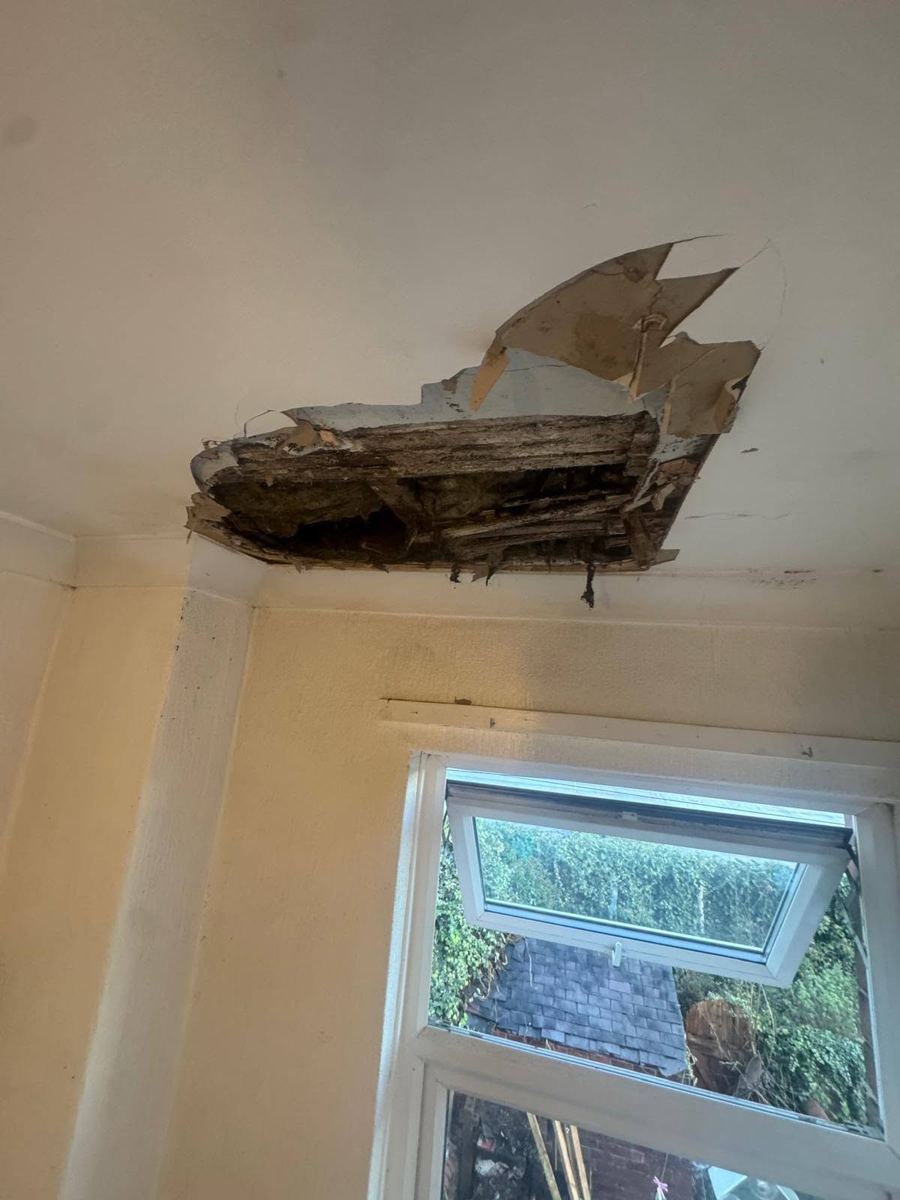
Unlike rising damp, which stays low on ground-floor walls, penetrating damp can appear at any height: upstairs bedrooms, ceilings, chimney breasts and the walls around windows are all common spots. It usually gets worse after heavy or wind-driven rain and may seem to dry out in a spell of good weather, only to come back.
Older homes with solid walls are especially prone to it, because there is no cavity to stop water that soaks into the outer face of the brick or stone from reaching the plaster inside. Once the wall stays wet, plaster breaks down, paint and wallpaper lift, and mould can follow.
Common causes of penetrating damp
Penetrating damp always has a way in. Finding it is most of the job, and these are the places we check first. More than one can be at work on the same wall, so we check them all rather than stopping at the first fault we find.
- Worn or cracked pointingThe mortar between bricks and stones wears away over the years, leaving gaps that let rain soak deep into the wall.
- Gutters and downpipesA blocked, cracked or leaking gutter can pour water down the same patch of wall every time it rains.
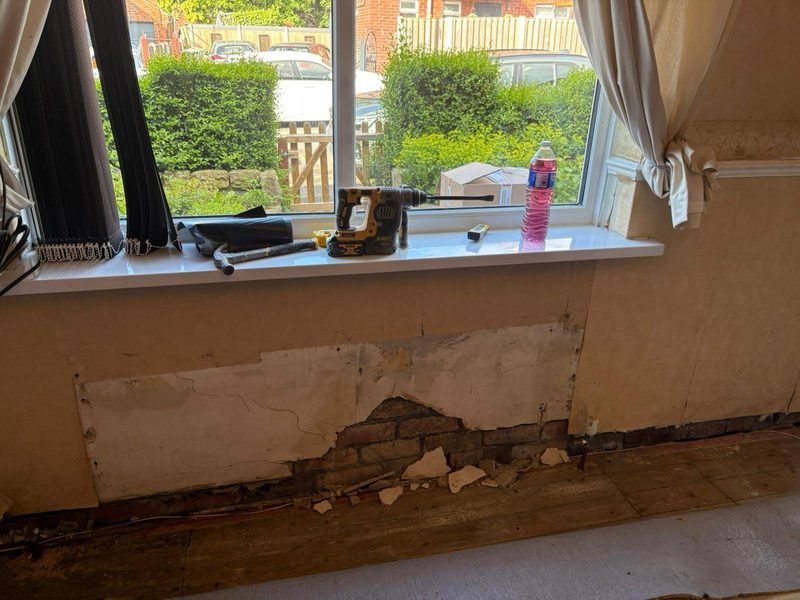
- Around windows and doorsFailed seals, cracked sills and gaps around frames let water run straight into the wall beside them.
- Cracked or damaged renderOnce render cracks, water gets behind it and is trapped against the wall instead of running off.
- Roofs, chimneys and flashingSlipped tiles, worn flashing and chimney defects let water in high up, often showing on ceilings and chimney breasts.
- Porous brickworkOld or weathered bricks and stone can soak up rain like a sponge, especially on walls that face the prevailing weather.
How to spot penetrating damp
If you have wet walls or damp patches, these clues point towards water coming in from outside rather than up from the ground or from condensation.
- Patches that grow after rain. The damp gets bigger or darker after wet weather, then shrinks when it is dry.
- Damp at any height. Patches upstairs, on ceilings or high on a wall rule out rising damp.
- One area, not the whole room. Penetrating damp tends to sit in a defined patch that lines up with a fault outside.
- Walls that feel cold and wet. The plaster may be wet to the touch, with paint bubbling or wallpaper peeling.
- Clues on the outside. Green staining, moss, missing pointing or an overflowing gutter on the outside of the same wall.
Condensation can look similar inside, so if you are not sure which you have, a free damp survey will tell you.
How we treat penetrating damp
Drying out the inside of a wall is pointless while water is still getting in, so we always deal with the way in first, then protect the inside so the damp cannot return through the new plaster. On one recent job the damp turned up under wallpaper in a front bedroom, and the cause was a leaking gutter outside.
- 1. Find the sourceWe look at the damp inside and the wall outside, take damp meter readings and trace the patch back to where the water is getting in.
- 2. Stop the water getting inThe fault outside has to be put right, whether that is guttering, a downpipe, a window or a leak. Some of that work belongs to another trade. We can bring in a roofer, plumber or joiner and include it in one price, or you can use your own tradesperson if you would rather.
- 3. Take off the damaged plasterInside, the plaster the water has spoiled is knocked off where it needs to come off, back to a sound background, so nothing damp or salt-contaminated is left behind the new finish.
- 4. Mesh system, then replasterA meshed membrane system is fixed to the wall inside and the wall is replastered over it, so the damp cannot come back through the new finish. You can decorate two weeks after replastering.
What affects the price of penetrating damp treatment
Penetrating damp is priced once we know where the water is coming from, because the fix for a leaking gutter and the fix for a whole weathered wall are very different jobs.
- What is letting water inResealing a window frame is a small job. Repointing an elevation or treating a large area of porous brickwork is a much bigger one.
- How much of the wall is affectedA single patch beside a downpipe or a whole gable wall make a big difference to the time and materials involved.
- Height and access outsideWork at first-floor height or above may need ladders, towers or scaffolding to reach safely.
- Damage to the plaster insideHow much plaster has been spoiled, and how much needs stripping and replastering once the wall has dried.
- Whether other trades are neededRoofers, plumbers and joiners can be brought in as part of the job. We can quote the lot as one all-in price, or price only our own work so you can use your own trades.
- More than one problemSometimes penetrating damp sits alongside condensation or rising damp, and each needs its own fix.
Every quote is a fixed price in writing. Book a free damp survey and we'll find where the water is getting in before recommending anything.
“We had EH plastering to sort out some damp we found under some wallpaper in a front bedroom caused by a leaking gutter. Extremely professional, reliable and helpful when we were unsure as to what we were dealing with. Brilliant job, would highly recommend.”
Guarantee
Fixed prices, and the guarantee on damp treatment
Penetrating damp work is quoted as a fixed price in writing, and never a penny more without agreeing it with you first. Where damp proofing treatment is part of the job, the treated areas are covered by our written 30-year guarantee, which passes to the new owner if you sell. Ask us what is covered on your job when we quote.
Penetrating damp questions
Why is my wall wet after it rains?
A wall that gets wet inside after rain almost always has water getting in from outside. The usual culprits are worn pointing, a leaking or overflowing gutter, a failed seal around a window, or porous brickwork on a wall that takes the worst of the weather.
Is penetrating damp the same as rising damp?
No. Rising damp is ground moisture climbing up ground-floor walls, usually no higher than about a metre. Penetrating damp is water coming in from outside and can appear at any height, including upstairs and on ceilings. They are fixed in completely different ways.
Can penetrating damp be fixed from the inside?
Not on its own. Replastering or painting inside while water is still getting in just means the new finish gets wet and fails again. Once the way in is fixed, we do protect the inside: the spoiled plaster comes off, a meshed membrane system goes on the wall, and it is replastered so the damp cannot come back through.
Do you do the outside repairs as well?
We find where the water is getting in, and some of those repairs belong to another trade, such as a roofer or a plumber. We can bring the right trade in and give you one price for the whole job, including jobs like taking radiators off or clearing rubbish away, or you can use your own tradespeople. We talk it through when we come out to quote.
How long does a wall take to dry out after penetrating damp?
It depends on how wet the wall got and how thick it is. Solid walls can hold a lot of water and may take a long time to dry out completely once the leak is stopped. New plaster put on afterwards is ready to decorate two weeks after replastering.
Can penetrating damp cause black mould?
Yes. A wall that stays damp gives mould the moisture it needs, so black mould often appears on or around patches of penetrating damp. Cleaning the mould without stopping the water means it comes back.
Wet walls or damp patches after rain?
Book a free damp survey and we will find where the water is getting in, with a fixed price in writing to fix it.