
Rising damp, treated at the source — not painted over
Damp walls with stained, salty or crumbling plaster along the bottom of the ground floor usually mean rising damp. We treat it across Dewsbury, Wakefield and West Yorkshire: a free damp survey to confirm it, then the damaged plaster stripped, a new damp proof course injected, a meshed membrane fixed and the wall replastered ready to decorate.
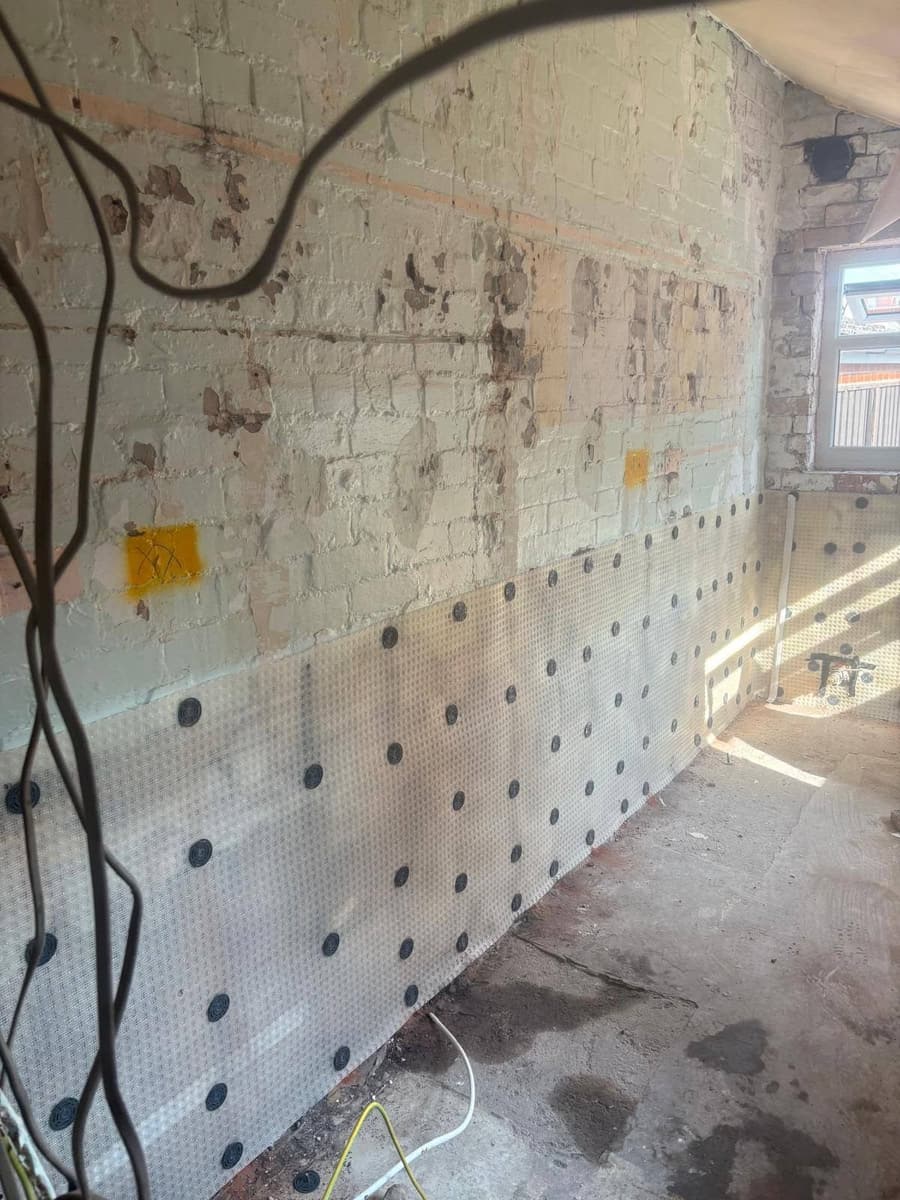
What rising damp is
Rising damp is water from the ground being drawn up through the bricks and mortar of a wall, much as a paper towel soaks up a spill. Most houses are built with a damp proof course, a barrier low in the wall that stops it. When a house has no damp proof course, when the old one has broken down with age, or when something has bridged it, such as a path or flower bed built up against the wall, moisture can start to climb.
The water brings salts from the ground with it. As the wall dries out at the surface, those salts are left behind in the plaster. They pull more moisture out of the air, stain the decoration and slowly break the plaster down from the inside. That is why damp walls often look worse after they have been redecorated a couple of times, and why a fresh coat of paint never lasts.
Rising damp is a ground-floor problem. Wet walls upstairs, around a window frame or on a ceiling have a different cause, usually penetrating damp getting in from outside or condensation forming inside, and each needs a different fix. Getting the diagnosis right comes before anything else.
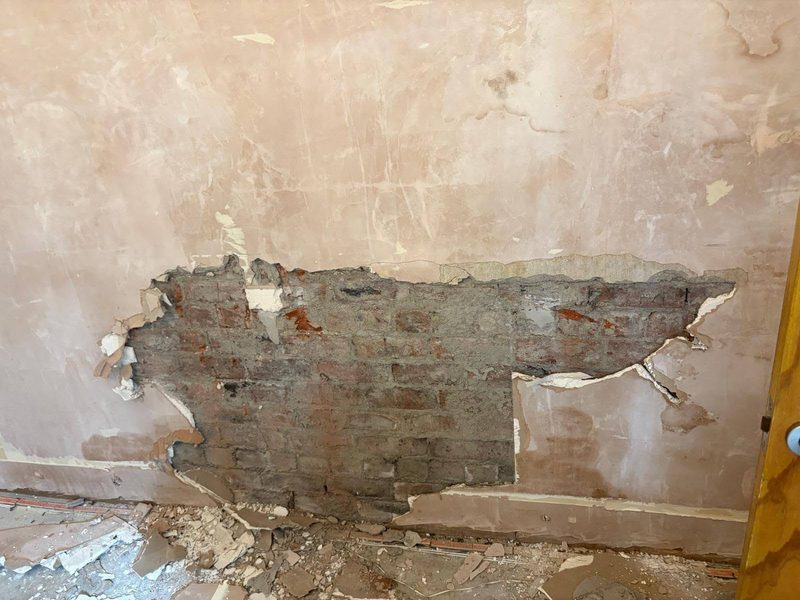
How to spot rising damp
These are the signs we look for on a survey. One on its own doesn't prove anything, but several together on a ground-floor wall usually point the same way.
- A tide mark low on the wallA brown or yellow line along the lower part of the wall, usually no higher than about a metre. It shows roughly how far the moisture is climbing.
- Blown or crumbling plasterTap the wall. A hollow sound means the plaster has come away from the brickwork behind it, which is what salts do to plaster over time.
- Paint and wallpaper liftingFinishes bubbling, peeling or coming away at the bottom of the wall, often worst near the skirting or behind furniture where air can't get to it.
- A musty smellA damp smell that hangs around a room even when it has been aired. Trapped moisture often makes itself known by smell before the damage is obvious.
Photos can only tell us so much. A damp meter reading tells us far more, so book a free damp survey and we'll tell you whether it is rising damp, something else, or nothing that needs work.
How we treat rising damp
Every rising damp job follows the same system, from the first reading to a finished wall you can decorate.
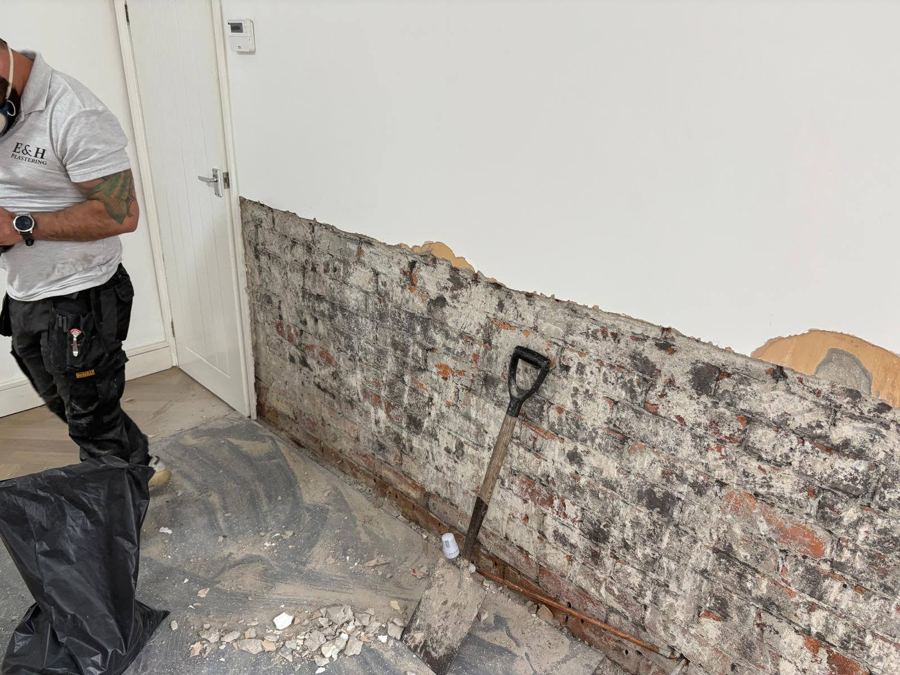
Confirm it and strip back
Damp meter readings confirm the cause and show how far along and up the wall it reaches. The salt-contaminated plaster is then hacked off back to sound brickwork, because plaster that has taken in salts will keep drawing moisture back into the room.
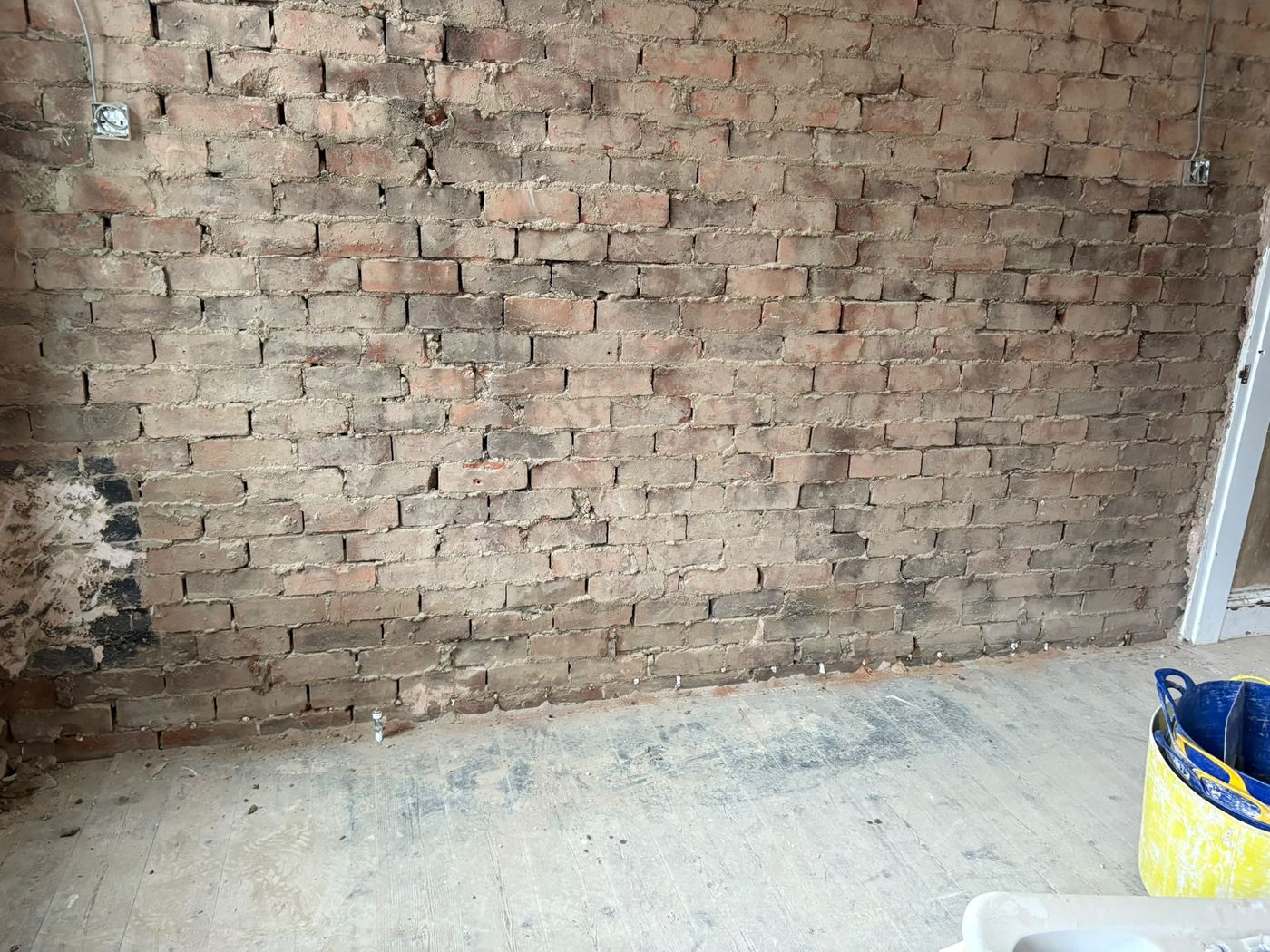
Inject a new damp proof course
Holes are drilled along a mortar bed low in the wall and a chemical damp proof course (DPC) is injected into them. It forms a new barrier inside the wall that stops ground moisture climbing any higher. The holes are then plugged.
Membrane, then replaster
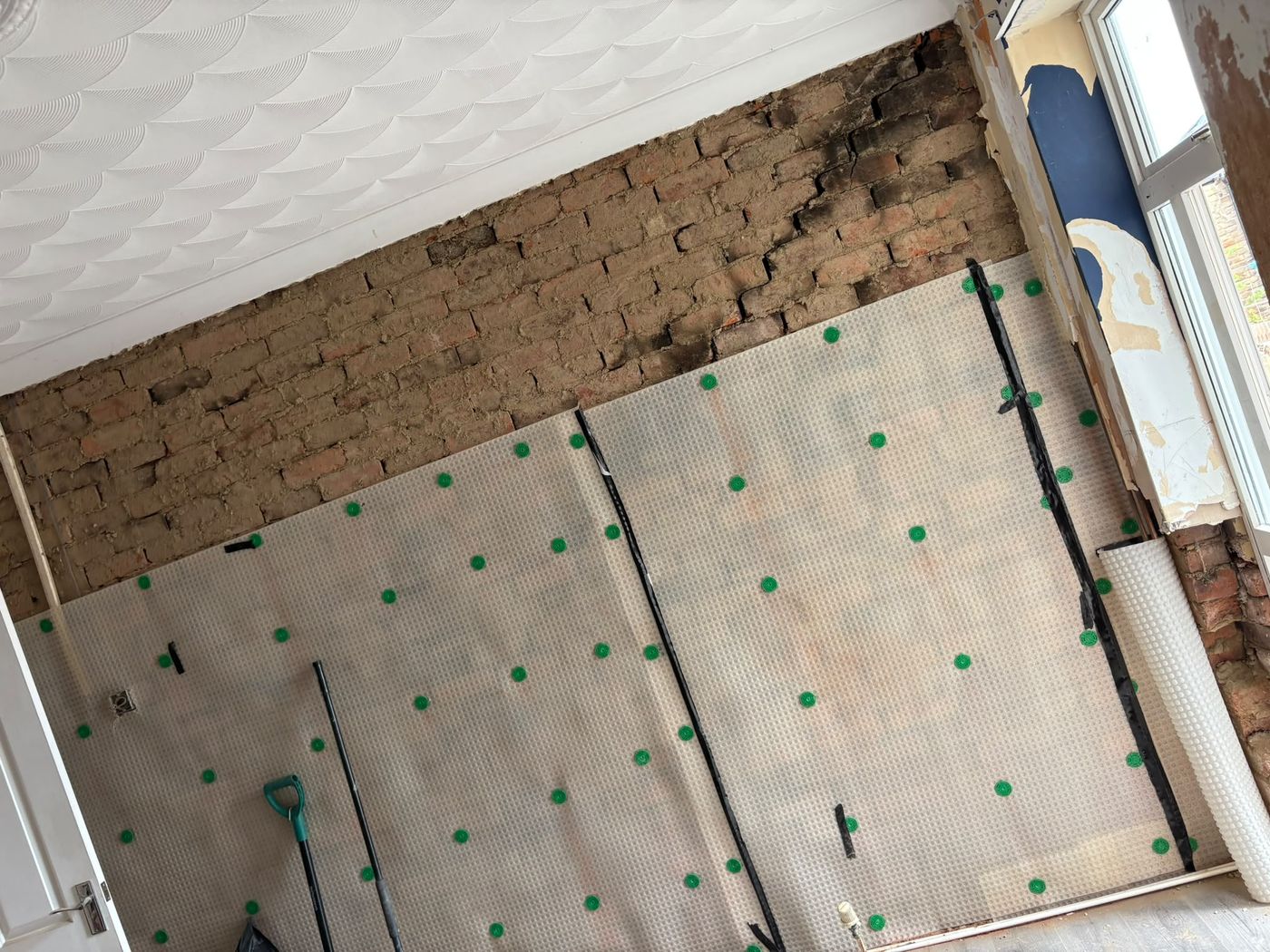
A 3mm meshed damp proof membrane is fixed over the treated brickwork to keep moisture still left in the bricks away from the new finish. The wall is then replastered and left clean, and you can decorate two weeks later.
What affects the price of rising damp treatment
We don't publish a price list for rising damp. Two jobs that look the same from the doorway can be very different once the plaster is off, so any figure given without seeing the wall would be a guess. These are the things that decide what yours costs.
- How many metres of wallTreatment is measured along the length of wall affected, and the survey shows which walls actually need it. A four-metre stretch of hallway and a whole ground floor are very different jobs.
- New skirting boardsSkirting boards come off so the bottom of the wall can be treated. If you'd like new ones fitted afterwards, we can arrange a joiner to fit them, which adds to the job.
- Access to the wallKitchen units, fitted wardrobes, radiators and heavy furniture against an affected wall all have to be moved or worked around, and that takes time.
- How much plaster comes offStripping the old plaster and replastering are part of the treatment, so the wall is left ready to decorate. The higher and further the damage goes, the more there is to take off and put back.
- Ground floor or cellarGround-floor walls are treated as described on this page. Walls below ground level need basement tanking instead, which is a different system with its own guarantee.
- What is behind the plasterNobody can see the brickwork until the plaster is off. If its condition changes the work needed, we'll explain why and agree it with you first. Never a penny more without agreeing it.
The only way to get a real figure is for us to look at the wall. Book a free damp survey and you'll get a fixed price in writing, with no obligation to go ahead.
Rising damp, before and after
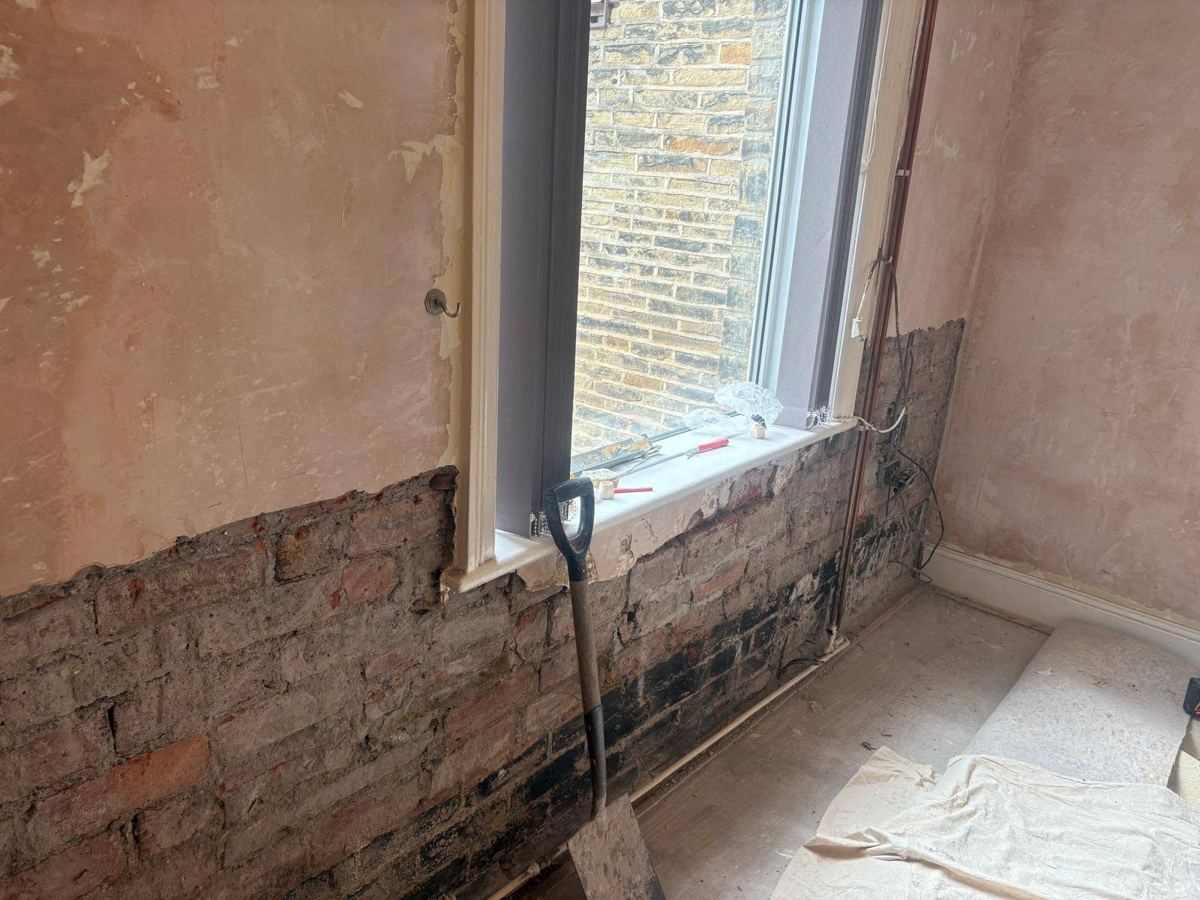
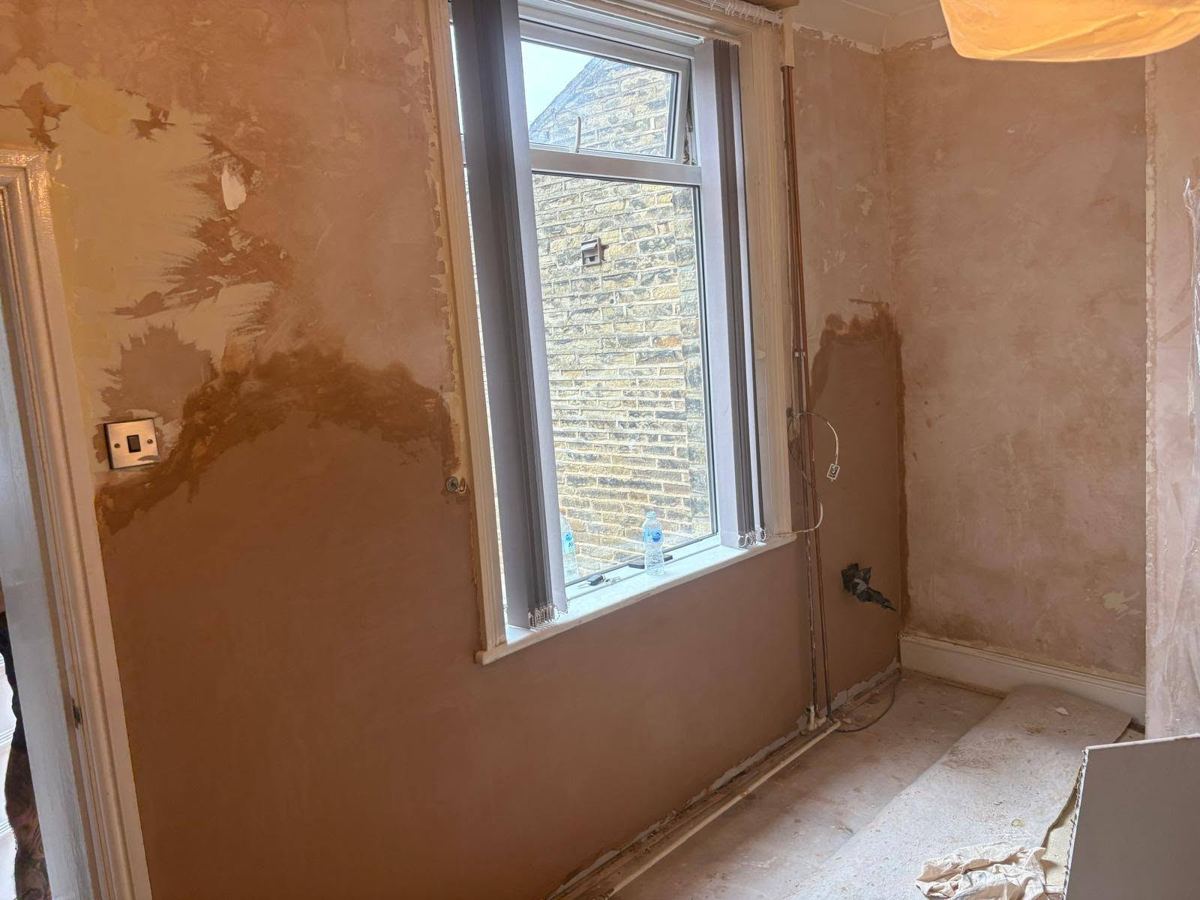
These two photos show the same window wall on one of our jobs. On the left it has been stripped back to brick during treatment; on the right it has been replastered to a smooth finish.
Jobs range in size. A recent full ground floor meant treating 23 metres of wall in three days, another customer had around 13 metres sorted inside three days, a Wakefield property needed roughly 22 metres of walling treated, and a smaller job in a hallway and stairwell covered four metres. Both are in our projects. We treat rising damp across Dewsbury, Wakefield, Batley, Leeds, Barnsley and the towns in between.
“Had rising damp in the living room causing issues. E&H came out at short notice and resolved it in 2 days — absolutely thrilled with the work, and such lovely blokes. Fully recommend 👍”
Guarantee
Your rising damp guarantee
When the work is finished, you get a written guarantee covering the areas we treated for 30 years. The treatment uses manufacturer-approved damp-proofing systems, and the guarantee passes to the new owner if you sell the house. If the damp is below ground in a cellar, the waterproofing system used there carries a 10-year guarantee instead.
Rising damp questions
Does the damp treatment leave a smell in the house?
No. There is a smell for us while the damp proof course is going into the wall, but it does not stay in the house, and once the wall is meshed and replastered there is nothing left to smell.
How long does rising damp treatment take?
It depends on how many metres of wall need treating. A full ground floor we treated recently, 23 metres of wall, took three days on site, and a smaller section takes less. We'll talk you through how long your job should take when we survey it.
Do I need to move out while the work is done?
You don't typically need to move out. Most jobs are done within a few days, and when a job covers several rooms we can work through them one at a time, so you still have living space while we're there.
Do the skirting boards have to come off?
Yes. The skirting boards come off so the plaster behind them can be stripped and the bottom of the wall treated properly. Once the wall is replastered, we can arrange a joiner to fit new skirting boards, so you don't have to find one yourself.
How soon can I decorate after rising damp treatment?
You can decorate two weeks after the wall has been replastered. That gives the new plaster time to dry out first, because paint put on too soon traps moisture in the plaster and can spoil the finish.
What does the 30-year guarantee cover, and does it transfer if I sell?
It covers the areas we treated, for 30 years, and you get it in writing when the work is finished. It passes over to the new owner if you sell the house. Cellar and below-ground waterproofing is a different system and carries a 10-year guarantee instead.
What happens if the damp comes back?
If damp returns in an area we treated, that is exactly what the written guarantee is for, so get in touch on 07931 095 536 and have your guarantee paperwork to hand. If new damp appears somewhere we didn't treat, it may have a different cause, such as a leak or condensation, and we'll tell you honestly what it is.
Think it might be rising damp?
Book a free damp survey for a straight answer, and a fixed price in writing if the wall needs treating.