
Tide marks on walls — what those brown stains are telling you
A brown or yellow line creeping up the wall, often with white powder on the plaster. Tide marks are one of the clearest signs of damp, and their height and shape say a lot about the cause. From damp specialists covering Dewsbury, Wakefield and West Yorkshire.
What tide marks look like
A tide mark is a stained line or band on a wall, usually brown, yellow or grey, with a wavy top edge like the mark water leaves on sand. Below the line the plaster may be darker, patchy or stained, and paint and wallpaper often lift along it.
You may also see white, fluffy or crystalline deposits on the surface. These are salts, carried into the plaster by water and left behind when it evaporates. They are one of the most telling clues in damp diagnosis.
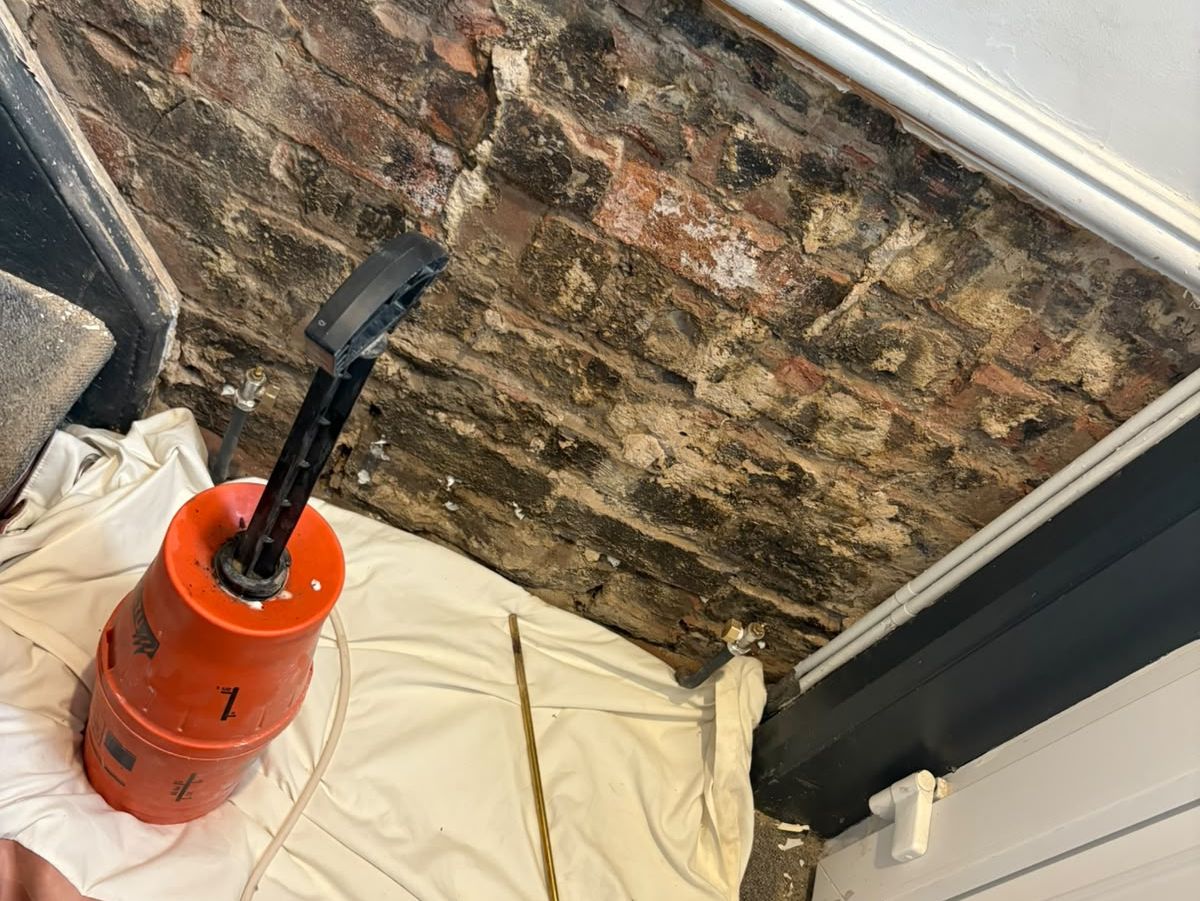
The three main causes of tide marks
Tide marks form where water has soaked into a wall and dried again, leaving salts and staining at the edge.
Rising damp
The classic cause. Ground moisture climbs a ground-floor wall, and the tide mark shows how high it reaches, usually up to about a metre.
Penetrating damp
Rain soaking in from outside leaves ring-shaped stains that can sit at any height, often below windows or where a gutter leaks.
An old leak
A leak that has since been fixed can leave a stain behind. The wall may be dry now, but salts in the plaster can still attract moisture.
How to tell what caused the tide mark
Height, shape and whether the wall is still damp point to the cause.
- A level band low on the wallAn even stain up to about a metre along a ground-floor wall points to rising damp.
- A ring or patch higher upA roughly circular stain at any height, often near a window or downpipe, points to penetrating damp or a leak.
- Salts on the surfaceWhite deposits mean water has carried salts into the plaster. They are common with rising damp.
- Stain but a dry wallAn old stain on a wall that now reads dry may be left over from a fixed problem. Salts can still cause trouble later.
Only a damp meter can tell whether a tide-marked wall is still damp. A free damp survey will check.
What fixing tide marks involves
Tide marks cannot be painted out. The stain comes back through, and on most walls the plaster underneath is holding salts that keep drawing in moisture.
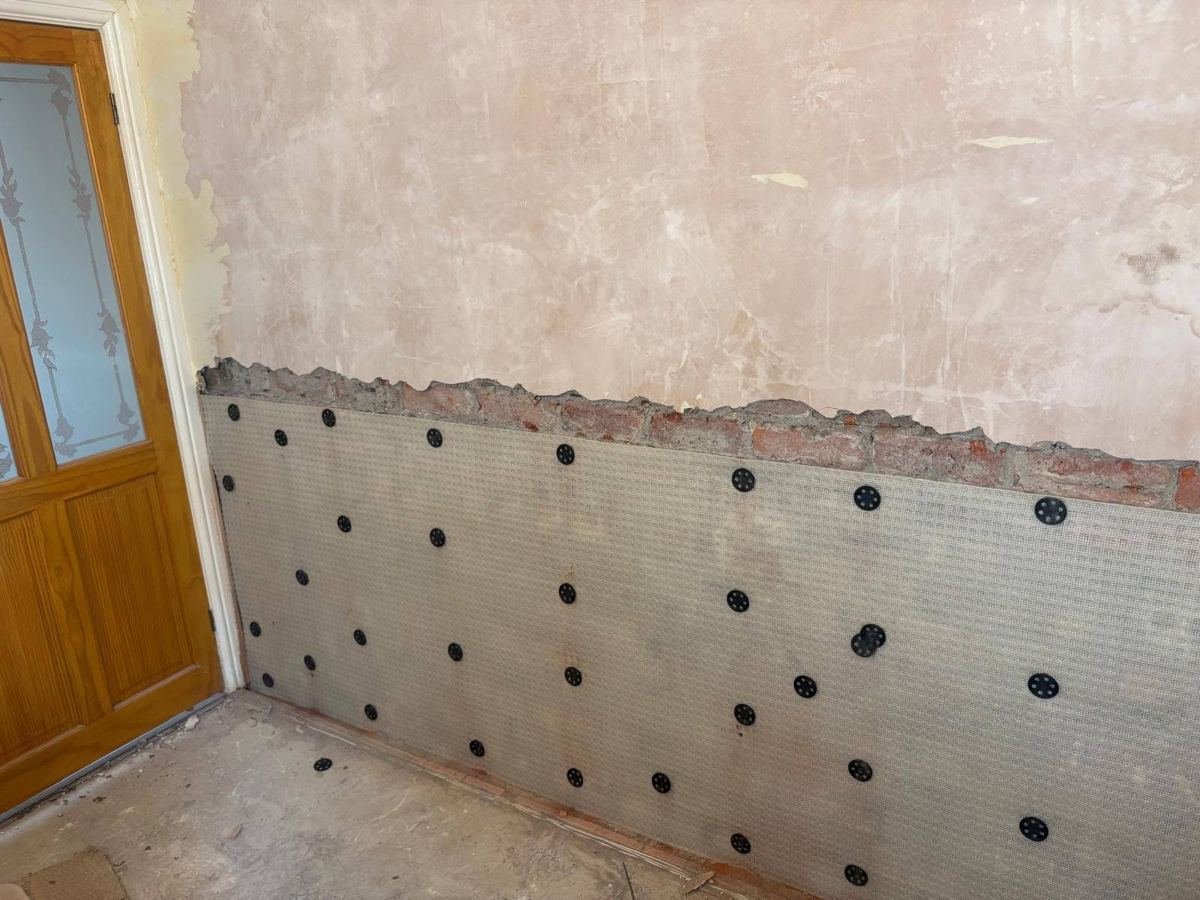
Where the cause is rising damp, the contaminated plaster is stripped back to sound brick, a new chemical damp proof course is injected, a meshed membrane is fixed and the wall is replastered. See rising damp treatment.
Where the cause is penetrating damp, the way the water gets in is fixed first, then the stained plaster is replaced. See penetrating damp treatment.
Where an old leak has been fixed and the wall is dry, the salt-affected plaster can be replaced so the stain does not return. See re-plastering. The new plaster is ready to decorate two weeks later.
What affects the cost of fixing tide marks
These are the things that decide the size of the job.
- Whether the wall is still dampAn active damp problem needs treating as well as the plaster replacing.
- The causeA new damp proof course and a repair to the outside of the wall are different jobs.
- Length and height of the stainHow many metres of wall are marked and how far up the plaster has to come off.
- Skirting boards and fittingsSkirting boards come off for rising damp treatment, and radiators and units have to be worked around.
There is no charge to find out. Book a free damp survey and, if work is needed, you'll get a fixed price in writing.
What happens if you leave tide marks
A tide mark is rarely just a stain. If the wall is still damp, the mark slowly climbs and spreads, salts keep breaking down the plaster, and paint and wallpaper keep failing. Eventually the plaster blows and comes away from the wall.
Even where the original problem has stopped, salts left in the plaster can keep drawing moisture out of the air on humid days, so the stain can reappear through fresh decoration.
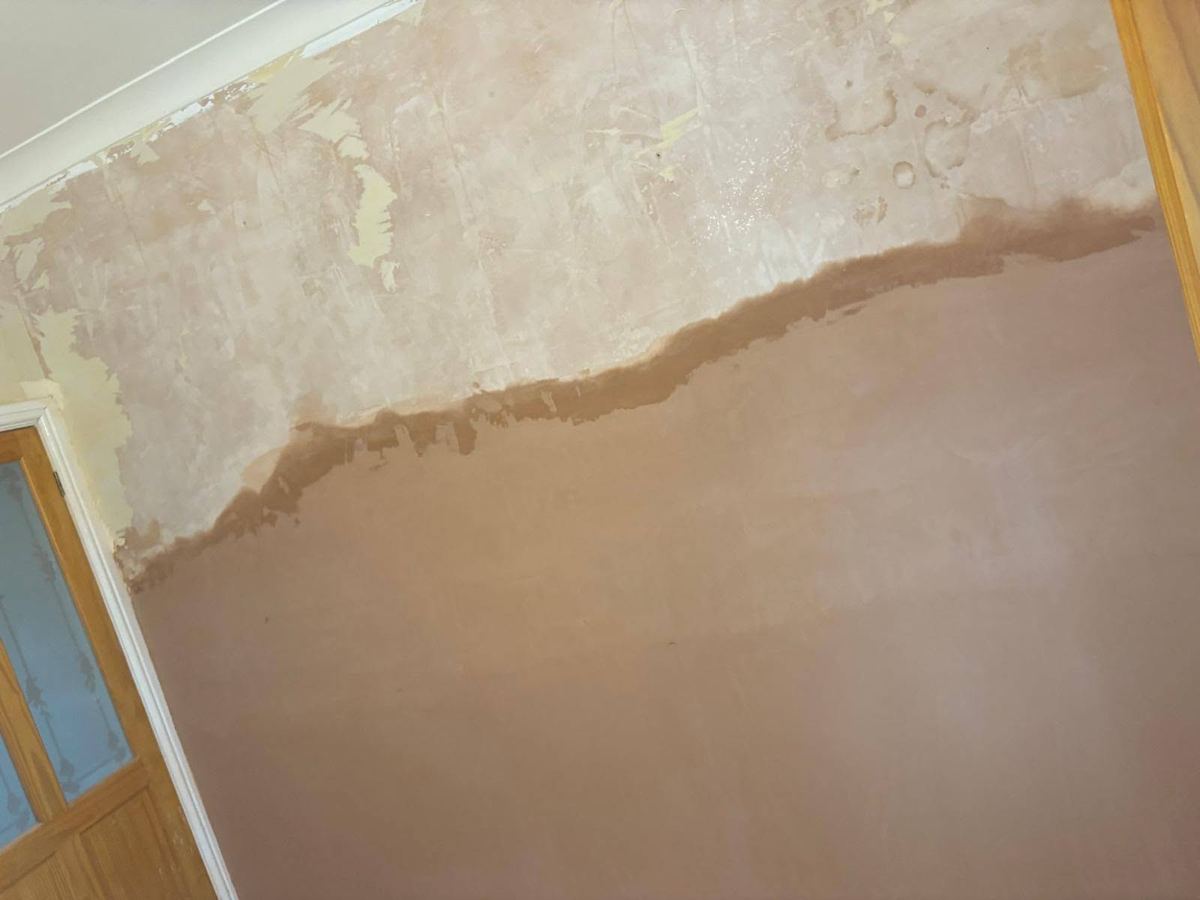
A treated wall, before and after
Once the cause of the damp has been treated, the wall is rebuilt properly. This wall on one of our jobs had a membrane fixed over the treated brickwork, then was replastered to a smooth finish.
Tide mark questions
Do tide marks on a wall always mean rising damp?
No, although rising damp is the most common cause of a level tide mark low on a ground-floor wall. Stains higher up, or ring-shaped marks near windows and gutters, are more likely to be penetrating damp or an old leak.
What is the white powder on my damp wall?
Those are salts. Water carries them into the wall from the ground or from the masonry itself, and they are left on the surface as it dries. They absorb moisture from the air, which keeps the plaster damp.
Can I paint over tide marks?
Stain-blocking paint may hide them for a while, but the mark usually comes back, and if the wall is still damp the paint will fail. The cause and the salt-affected plaster need dealing with first.
How high does rising damp go?
Rising damp is usually seen up to about a metre above the floor. Staining much higher than that, or on upstairs walls, points to another cause.
Why has the tide mark come back after replastering?
Either the damp was never treated, so the new plaster is taking up moisture and salts in the same way, or the old salt-contaminated plaster was not fully removed. Both mean the cause needs checking properly.
Are tide marks on a ceiling the same thing?
Not usually. Rising damp cannot reach a ceiling, so a ring-shaped stain there almost always means water has come from above: a roof leak, a leaking pipe, or a bathroom or tank in the room above. Once the leak is fixed, the stained plaster can be replaced.
Tide marks on your walls?
Book a free damp survey and we will check whether the wall is still damp and what caused it.