
Why is my wall wet? The causes, and the fixes
A wall that is actually wet, rather than just stained, means water is reaching it right now. Here is what usually causes wet walls, how to work out which you have, and what puts it right, from damp specialists covering Dewsbury, Wakefield and West Yorkshire.
What wet walls look like
A wet wall is wet to the touch. You might see beads of water on the surface, drips running down to the skirting, or a dark, soaked patch that leaves your hand damp. Paint goes soft and bubbles, wallpaper peels away, and plaster can start to sag or crumble. The wet area usually feels noticeably colder than the rest of the wall.
Wet walls are different from walls that are just stained or slightly damp. Staining can be left over from an old problem. Water you can feel means moisture is reaching the wall now, and it needs tracking down quickly.
The three usual causes of wet walls
Rising damp makes walls damp and salty rather than running wet, so a genuinely wet wall is usually one of these.
Condensation
Warm, moist air hitting a cold wall turns straight back into water. On cold mornings it can leave walls, especially outside walls and bathroom walls, visibly wet.
A leak
A dripping pipe, a failed shower seal, a leaking radiator valve or a problem in the flat or room above can soak a wall from the inside.
Rain getting in
Blocked or broken gutters, missing pointing and failed seals around windows let rainwater run into and through the wall.
How to tell what is making your wall wet
Notice when the wall gets wet. The timing usually gives it away.
- Wet in the morning, drier laterCondensation. It builds overnight when the house is cold and closed up, and eases as rooms warm and air.
- Wet after showers or cookingCondensation from steam, especially in bathrooms and kitchens without good ventilation.
- Wet after rainRain getting in from outside. Check the gutters, downpipes and pointing on the other side of that wall.
- Wet all the time, whatever the weatherA leak. Look for pipes, radiators, a bathroom or a water tank near the wet patch.
If water is near sockets, switches or light fittings, turn the electricity off at that circuit and get an electrician to check it. For everything else, a free damp survey will pin down the cause.
What fixing a wet wall involves
The first job is always to stop the water. There is no point drying out or replastering a wall that is still getting wet, and doing things in the wrong order just means paying for the plastering twice.
For condensation, that means getting moist air out of the house and fresh air in, often with a PIV unit, plus a few changes to everyday habits. See condensation control.
For a leak, the pipe, seal or fitting needs repairing, usually by a plumber, before anything else is done.
For rain getting in, the gutter, pointing or window seal letting the water through has to be put right. See penetrating damp treatment.
Once the water has stopped and the wall has dried, any plaster that has sagged, blown or stained is stripped and replaced, ready to decorate two weeks later. See re-plastering.
What affects the cost of fixing wet walls
The cost depends mostly on where the water is coming from. These are the main variables.
- The source of the waterA ventilation improvement, a plumbing repair and a repair to the outside of the wall are very different jobs.
- How long it has been wetA wall that has been wet for months usually has more damaged plaster to replace than one caught early.
- How much is affectedA patch beside a pipe, a whole wall, or a ceiling as well.
- Other tradesPlumbing and roofing repairs may need their own tradesperson, priced separately.
There is no charge to find out. Book a free damp survey and, if work is needed, you'll get a fixed price in writing.
What happens if you leave a wet wall
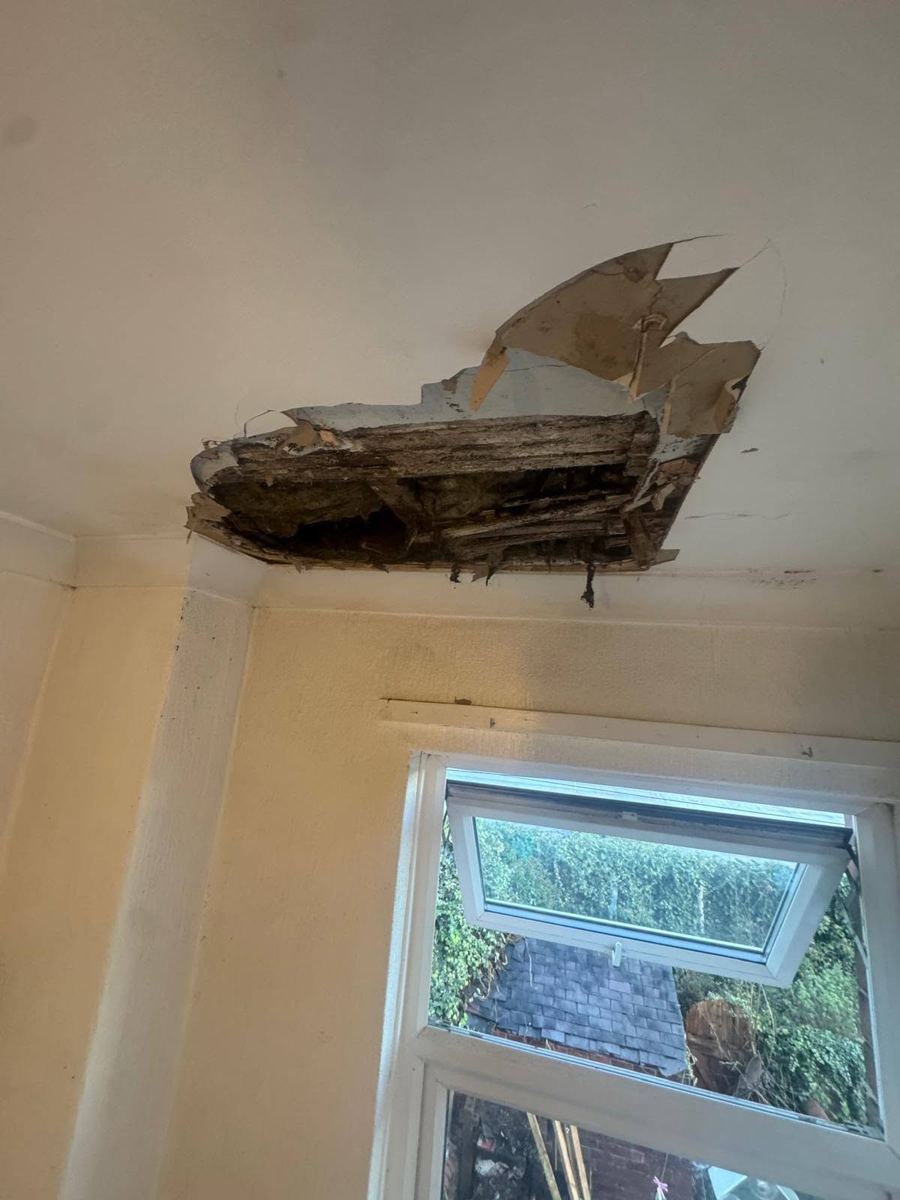
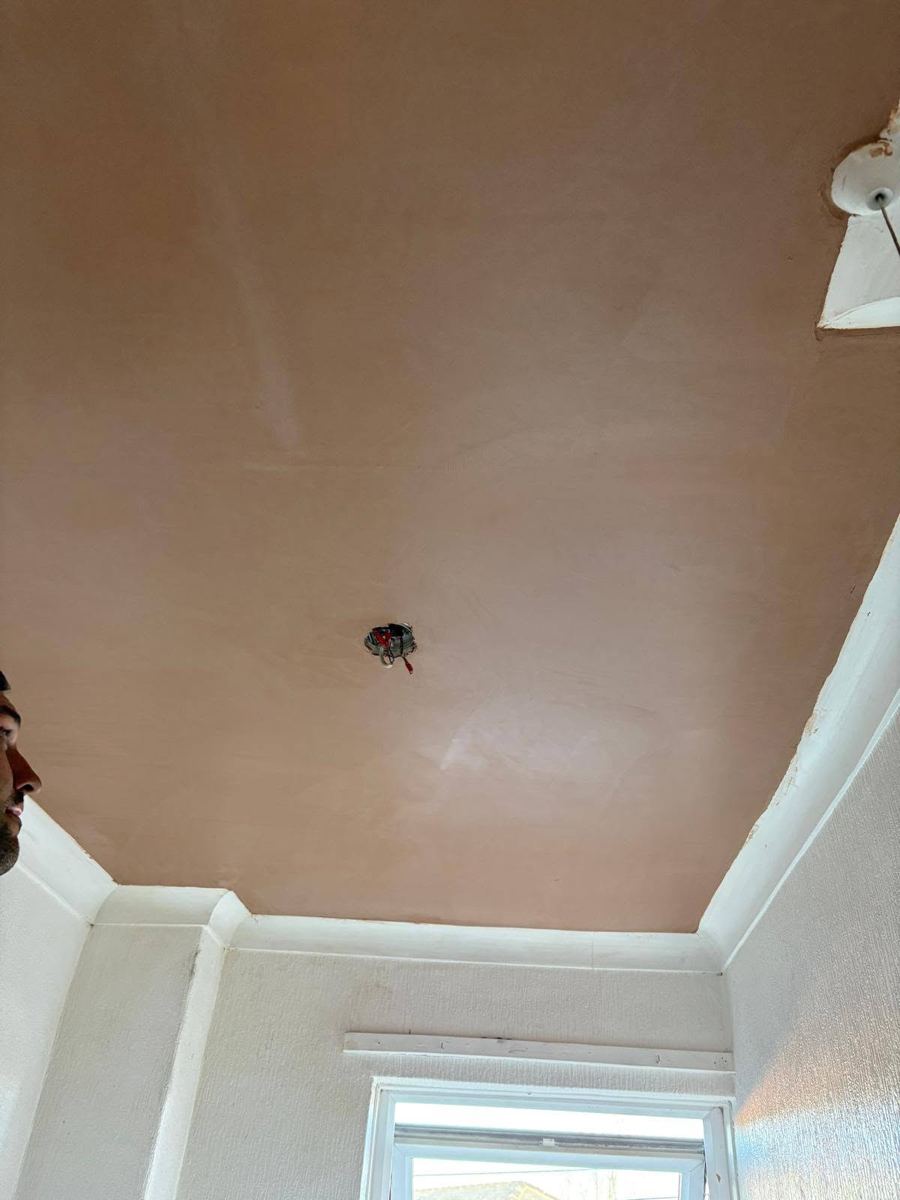
Water does damage quickly. Plaster that stays wet softens, blows and eventually falls away, and a soaked ceiling can come down, as the roof leak in the photos shows. Black mould grows fast on wet surfaces, and timber skirting boards, frames and joists can start to rot.
The longer a wall stays wet, the bigger the repair. Catching it early usually means a smaller job and less plaster to replace.
Water damage, before and after
A ceiling brought down by a roof leak at a landlord’s property, repaired and replastered once the water had been dealt with.
Wet wall questions
Why is my wall wet to the touch?
A wall that is wet to the touch has water reaching it right now, usually from condensation, a leak or rain getting in from outside. When it gets wet, after rain, after showers or all the time, is the best clue to which.
Why is my bedroom wall wet in the morning?
That is almost always condensation. Overnight, moisture from breathing builds up in a closed, cooling room and settles on the coldest surfaces, often an outside wall or the wall behind the bed or wardrobe. Better ventilation is usually the answer.
Can rising damp make a wall wet?
Rising damp makes walls damp, stained and salty rather than running wet. If you can feel water on the surface, condensation, a leak or rain getting in is more likely.
How long does a wet wall take to dry out?
Once the water is stopped, a thin wall may dry in weeks, but thick or solid walls can take much longer. Any plaster replaced once it has dried needs another two weeks before you decorate.
Should I call a plumber or a damp specialist?
If the wet patch is near pipes or a bathroom and stays wet whatever the weather, a plumber should check for a leak first. If it changes with the weather or the time of day, a damp specialist is the better first call.
Can condensation really make a wall that wet?
Yes. In a cold, closed-up room, especially a bathroom or a bedroom with an outside wall, condensation can leave a wall wet enough to run down to the skirting. If the wall is wettest first thing in the morning or after showers, condensation is the likely cause.
Not sure why your wall is wet?
Book a free damp survey and we will track down where the water is coming from.